AOS at “HYBRID CITY II: Subtle rEvolutions” with “Real Time Dissent in the City”

We will be at

The HYBRID CITY II: Subtle rEvolutions
Conference, workshops, exhibition and parallel events
23-25 May 2013
National and Kapodistrian University of Athens

with our contributions:

  • Real-time dissent in the city: tools and tactics for contemporary disseminated, dispersed, recombinant movements

    • Abstract –  During years 2011 and 2012 we have created a series of open software platforms which are able to analyse in real-time the content which is produced by users of social networks such as Facebook, Twitter, Instagram, Flickr and Google+, by combining data-harvesting technologies, natural language analysis and geo-location. We have used these technologies in different ways with the objective of trying to understand the various forms in which dissent manifests itself in the scenario of contemporary urban areas, characterized by the progressive availability of accessible ubiquitous technologies such as smartphones and network-enabled devices.


  • Re-thinking public space and citizenship through ubiquitous publishing and technologies. The experience of Ubiquitous Pompeii for the Italian Digital Agenda.
    • Abstract – In this paper, we describe the first instances of a family of projects with similar characteristics. Through these projects, we aim to establish contact with urban communities to a) suggest visions for possible forms of city innovation and to b) start co-creative processes for imagining, designing and enacting transformative processes. These co-creative processes involve technologies and innovative methodologies which are able to create knowledge, participation, sustainable and inclusive business models. One of these projects is the Ubiquitous Pompeii where our research and design team developed a city wide process in the city of Pompei in Italy. Ubiquitous Pompeii started by engaging high school students with a series of workshops structured in two phases: a) students’ awareness about the scenarios and opportunities offered by ubiquitous technologies; and b) the acquisition of the skills used to appropriate the technologies and methodologies and to embrace participatory design processes. Students were able to design and develop their visions for the development of their city and its communities, creating services and digital tools. Peer-to-peer learning and collaboration practices played a crucial role. Tools, methodologies and roles have been designed and developed to support the emergence of practices engaging all agencies into a networked process for the creation of the digital future of the city. Institutions and operators play the role of facilitators in what basically is becoming a citywide co- creative process. Along these lines, we have structured a transdisciplinary methodology and a technological toolkit dedicated to cities and urban communities including collaborative ethnography to observe the various stages and processes of the project and discuss its meta-stories with the different actors. The project has been declared as an official best practice for Italy’s Digital Agenda, and as such will be scaled to other cities in the near future, also envisioning wider knowledge sharing and collaboration tools which will be able to interconnect the different communities.
The HYBRID CITY II: Subtle rEvolutions

The HYBRID CITY II: Subtle rEvolutions

VivaCosenza: how to transform a city event into a real-time participatory performance

Realtime VivaCosenza

Realtime VivaCosenza

VivaCosenza Performance Lab is an international event about art and performance that will be held on December 8th and 9th, 2012 in the city of Cosenza, an ancient and beautiful site of the south of Italy.

The event will feature multiple international artists, a city-wide forum engaging the whole population in cultural design and activities dedicated to the creation of public strategies and policies, as well as a series of innovative scenarios dedicated to education, for high school and university students.

At AOS we have been invited to design the digital life of the festival. A first, early version of the website which will host all this part of the initiative can be seen here: http://vivacosenza.it/viz 

We decided to create some tools which could be used by students and citizens to enact the real-time, participatory narratives of the event, as fundamental part of all of the education, communication and cultural formats which have been designed for the festival.

Using a series of open technologies which we had developed for the ConnectiCity and VersuS projects, we have setup a system which is able to capture in real-time all of the social network activity of citizens, students, visitors, organizations and institutions of the city of Cosenza and also of the people who will use social networks to communicate about the festival and the city from other locations.

A set of language-based technologies will then be used to classify all this information, in real time, being able to understand the themes, issues and subjects which all this information is talking about.

Special focus will be given to the projects created by high-school and university students, who have been asked to create communication formats for the festival, dealing with arts, food culture and new forms of journalism and storytelling. The contents created in these formats will be given special highlight and the best ones will be awarded a prize and be taken into consideration for further development for next year’s edition.

Even more, all of the emergent communication which will be generated in real-time during the festival will be captured from social networks, and visualized both online, on smartphone/tablet applications as well as using a projection mapping in a public space in the city, so that all citizens will be able to experience the digital life of the city directly from public space.

The objective of the platform is to understand the ways in which these kinds of technologies can be used to transform the life of the citizens of the city, to imagine, design and enact novel participatory approaches.

In this, we suggest a new role for institutions, who become promoters and maintainers of new forms of expression which are available and accessible to everyone.

Justas we used technology to create an infrastructure for expression to be used by students to create their own formats, we imagine a “city as a platform” (for example as we suggested in Trieste a few weeks ago), where ubiquitous infrastructure (both cultural and technological) is made accessible and usable through public policies, enabling citizens and city dwellers to basically have the tools to design and build their own digital, cultural, business, communication, storytelling, envisioning ecosystem.

We will start from scratch with the students and, thus, we have setup a basic set of technologies, for them to be used as building blocks for their communication and storytelling formats.

For example, we have setup a platform which will capture all city relevant public content generated on social networks (relevant either because it was generated in the city, or because it discusses on city-relevant issues).

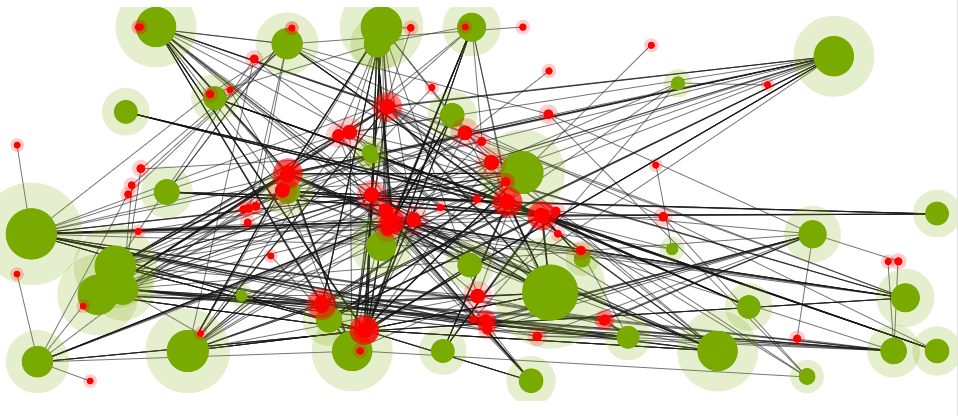
Here below you can see a visualization of the data in the system being captured in realtime:

Data being captured and visualized in Cosenza in realtime

Data being captured and visualized in Cosenza in realtime

The green dots show topic clusters (larger means “more important”), while red dots show user clusters, being connected to the topics they are discussing.

Data can be analyzed according to time, using timelines such as the one below:

the Digital Days of the city of Cosenza

the Digital Days of the city of Cosenza

And users can be analyzed for their activity (how many contents they produce on social networks) and according to the topics they discuss, as seen in the two images below

Digital Citizens in Cosenza

Digital Citizens in Cosenza


What digital citizens discuss in Cosenza

What digital citizens discuss in Cosenza

For example, topic clusters can be organized into easy to access groups, thus establishing multiple possible participatory communication formats.

Here, for example, we have assembled some for the beginning of the festival (bars are almost empty for now, as the festival has not begun yet), and by simply clicking them people will access what students and city dwellers have produced, shared and communicated in the specific format, across social networks and sites.

some formats, dedicated to the festival

some formats, dedicated to the festival

It must be highlighted how these technologies allow capturing in real-time the public communications which citizens publish on social networks (for VivaCosenza we will be using Facebook, Twitter, Instagram and Youtube). So we will capture all (and only) those messages which are intended as being public by their publishers (users/citizens).

Yet this is a delicate issue, as the definitions of privacy, public/private spaces are rapidly changing, and many times people have a hard time in understanding the reach and scope of visibility which the messages they post online have.

We will use this occasion to also explore these important issues: we do not wish to promote a novel form of Panopticon, but a cultural approach according to which individuals and groups can freely decide what and how to communicate, to whom it should be visible and accessible, and to use this information to create opportunities for collaboration, sustainable business, social innovation and art.

So heads up and come at VivaCosenza Performance Lab!

AOS at Roma Contemporary: Ubiquitous Publishing, cities and bodies


We will be at Roma Contemporary, at the MACRO Museum, Testaccio, Rome, on May 26th 2012, at 5pm, to have a presentation about the scenarios of Ubiquitous Publishing and the transformations which it brings on to cities and human beings.

We will be together with Dario Salani, presenting his Prinp self publishing house, Valentina Tanni, art critique extraordinaire, and Chiara Passa, who will use her wonderful projects to show even more radically fascinating scenarios.

Be there!

Augmented Reality: the Augmented City, communication and citizenship

On May 17th 2012, we took part  to prof. Marco Stancati’s course of Media Planning at La Sapienza University of Rome with a lecture on the scenarios offered by Augmented Reality to the creation of novel opportunities for communication and business.

HERE you can find some information about our lecture and the MediaPlanning course.

HERE you can download the slides we used for the lecture

(The slides are a lighter version of the ones we used in class, which were full of videos and hi-res images: please feel free to contact us should you want the original ones)

In the lecture, we started from a series of definitions about what, in our times, can be considered as “Augmented Reality”

Augmented Reality in the city

Augmented Reality in the city

In our definitions we chose to describe a wider form of the term, not limiting it to the set of applications to which we’ve all been accustomed to , and abandoning for a moment the vision of people happily strolling through cities with their smartphones raised in front of their faces.

Nonetheless we used classical examples of AR to introduce a possible evolution of what is/will be possible in our cities using ubiquitous technologies.

We focused on the idea of the Augmented City.

augmented city and its many voices

augmented city and its many voices

In this vision of the city, many subjects (individuals, organizations and, using sensors, also the city itself) add layers of digital information, in real-time. We can access and experience these  sets of information in multiple ways, and we can also use them to compose, dynamically, our personal vision of the city, by remixing, re-arranging, re-combining and mashing-up all the information layers which are available.

This is a very interesting situation for cities and their citizens, as it enables for the creation of entire new scenarios for communication, business and personal expression.

It also opens up possibilities which will probably have a high impact on the ways in which, for example, enterprises design their own products, and the ways in which they create the strategies according to which products and services are communicated, marketed, monitored.

We discussed this scenario below, among the many possible:

augmenting the voices on products

augmenting the voices on products

The physical packaging of products usually hosts information and messages which are created by a very limited number of voices (e.g.: the manufacturer, marketing team..).

In the drawing we see depicted a scenario which is becoming progressively more frequent: a multiplicity of subjects are now able to join the Brand in adding digital information to products and services, using Augmented Reality, QRCodes, computer vision, tagging (e.g.: RFID) and location based technologies. We call this Ubiquitous Publishing.

For example, in the Squatting Supermarkets project we used products’ packaging as visual reference for critical Augmented Reality experiences. In the performance, people could use their smartphone to “look at” products on a supermarket shell. When they did, a series of information became available:

  • a map, created using MIT’s Open Source Map, showing where the product and its components came from, where its materials came from, where it had been processed and assembled, and in which places it stopped during transportation; the product becomes a map of the planet highlighting all the places which it touched during its manufacturing and distribution processes;
  • a series of visualizations showing the product’s composition, the percentages of organics, chemicals, fat, aromas… all shown through interactive information visualizations.
visualizations in Squatting Supermarkets

visualizations in Squatting Supermarkets

One of the visualization was analyzed in deeper detail. On the top right of the previous image, is a timeline of the real-time conversations about the product: the timeline scrolls left and right and each colored block represents a conversation and its general sentiment (meaning: the sentiment which is most represented in the conversation); green, yellow and red code positive, mixed and negative sentiments.

So: while strolling through the aisles of a supermarket, you take a take a picture of your favorite product and you are able to see what people on social networks are saying about it, in real-time.

We observed this possibility (to publish real-time, user generated information using ubiquitous publishing techniques and accessible information visualizations) to describe an interesting loop which we are able to make.

We can imagine (and do) to harvest user generated information in real-time about our topics of interest (from blogs, websites, social networks and social media sites) and to publish them when/where they are most useful.

VersuS, the real-time lives of cities

VersuS, the real-time lives of cities

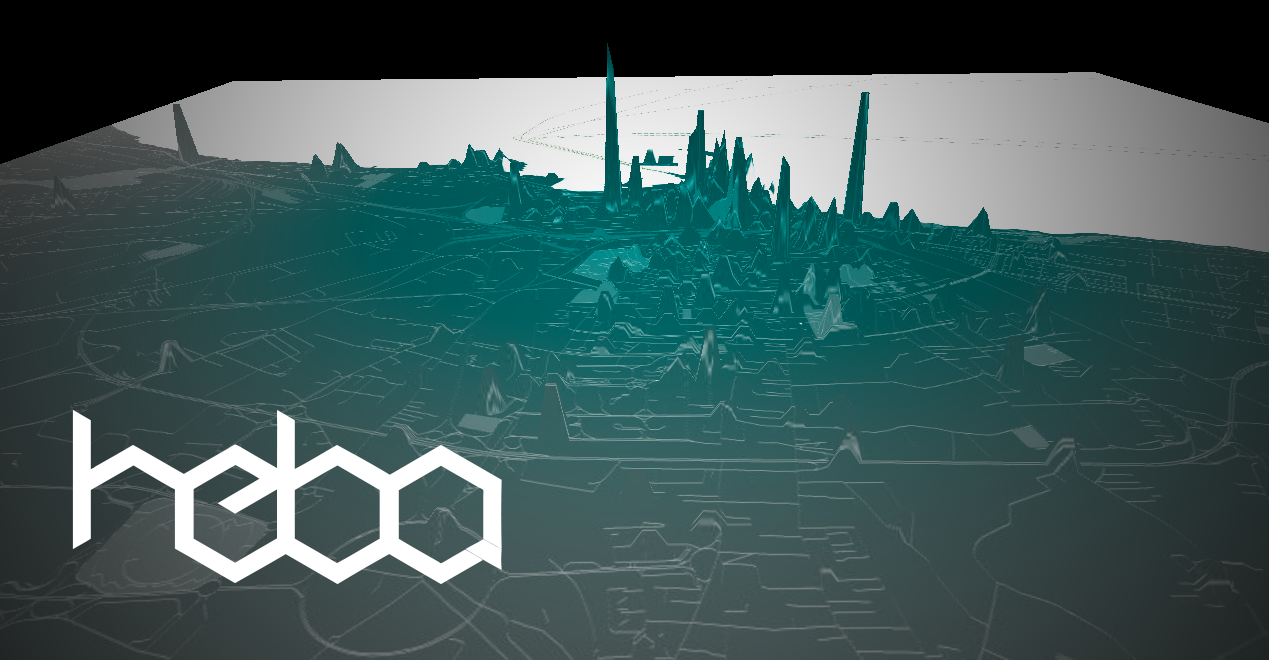
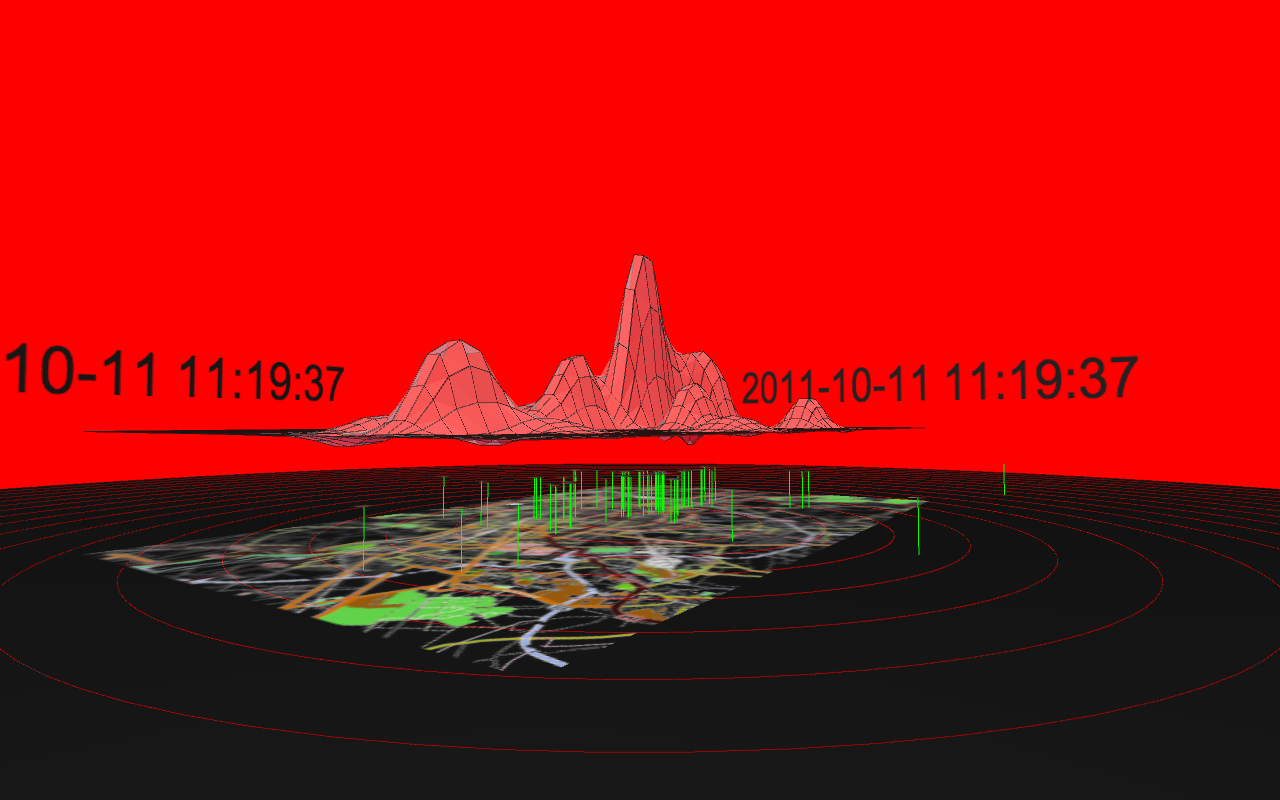
The image above shows the experiment we performed with the VersuS project during the city-wide riots taking place in Rome on October 15th 2011.

The 3D surface covering the map of the city of Rome shows the intensities of the social network conversations taking place during the protests and riots. The image is part of a real-time visualization through which we have been able to observe how social media conversations closely followed the evolution of the protest.

By using harvested conversations (from Facebook, Twitter, Flickr and Foursquare) we have been able to analyze what was being said and where, and we actually were able to demonstrate how a massive amount of useful information was being published by users: about violence, injuries, possible escape routes, missing people. All this information could have been actually collected and organized, and accessed by protesters through specifically designed interfaces to achieve important, pragmatic results such as avoiding being hurt, finding safe escape routes from the riots or find our friends who were lost in them.

We were able to design, for example, the simple Augmented Reality application for smartphones pictured below:

Augmented Reality for Riots

Augmented Reality for Riots

Augmented Reality for Riots

Augmented Reality for Riots

This experimental interface shows how a rioter could have visualized on the screen of the smartphone the degree of safety in the direction he/she was facing, as it could be inferred by the social media conversations with a geographic reference.

An immediate, easy to use tool to achieve important goals.

During the lesson we focused on how it would be possible to use these technological opportunities to conceive and enact innovative communication practices.

We described a couple of scenarios, which we can imagine being applied in different forms, ranging from the creation of scenarios for the public lives of cities and their citizens, to the needs of communicators for their work with enterprises and administrations, to the needs of marketing and advertising.

In synthesis, we imagined a novel, more extensive, definition for Augmented Reality, according to which a loop is formed among the digital and physical world.

In this definition of AR it is possible

  • to harvest user-generated (as well as database and sensor generated) real-time information about relevant places/topics/products/services,
  • to process it using techniques such as Natural Language Processing and Sentiment Analysis,
  • to publish it ubiquitously, where/when it is more useful, using interfaces and interaction schemes which ensure accessibility and usability (including smartphone apps, urban screens, wearable technologies, digital networked devices, information displays…) and
  • to provide ways according to which users are able to both contribute to the flow of information and to re-assemble and re-interpret it, creating additional points of view


Ubiquitous Publishing school in Pompei: roundup

After the RWR adventure in Cava de’ Tirreni, Ubiquitous Publishing arrives in the schools of Pompei.

Ubiquitous Publishing in Pompei

Ubiquitous Publishing in Pompei

Together with the project “McLuhan Meets Pompei“, promoted by the Associazione Amici di Media Duemila ONLUS in collaboration with the City Council for Communication and Technological Innovation of the City of Pompei, the FakePress and Art is Open Source teams have started their education program on augmented reality in two high schools in the city of Pompei (Liceo Scientifico Pascal and Istituto Bartolo Longo).

On November 11th and 12th 2011 two workshops engaged around 100 students on the theme of Ubiquitous Publishing: the possibility to tell new stories and invent new narratives using technologies which allow us to transform any body, architecture, objects and entire cities into spaces for publication.

The workshops were based on the experience of novel practices.

The MACME and NeoReality platforms produced by FakePress have been used to create cross media content, QRCodes and Augmented Reality content, together with students: every one of them will benefit from the availability of a dedicated platform, Ubiquitous Pompei, which will remain at their disposal to enact collaborative processes between students, professors and the city administration.

The workshops ended with a call for action: students were invited to imagine their own version of the “augmented city.

In a public ceremony on December 14th the institutions will evaluate the proposals and give students a certificate documenting their participation to the project.

Will students be the authors of the digital strategy for the city of Pompei?

Images:
http://www.flickr.com/photos/xdxd_vs_xdxd/sets/72157628127445670/

Presentation slides:
www.slideshare.net/xdxd/slides-10135971

MACME
www.fakepress.it/FP/?p=1617

NeoReality
neoreality.artisopensource.net/