the Co-Creation of the City on a new book

Just out from press:

Advancing Research Methods with New Technologies:

Advancing digital technologies continue to shape all aspects of our society, with particular impact on the professional research community. These new and exciting developments offer considerable advantages in terms of speed, access connectivity, and economy.

Advancing Research Methods with New Technologies examines the applicability and usefulness of new technologies, as well as the pitfalls of these methods in academic research practices. This book serves as a practical guide for designing and conduction research projects for scientists all of disciplines ranging from graduate students to professors and practitioners.

We have contributed a chapter titled The Co-Creation of the City:

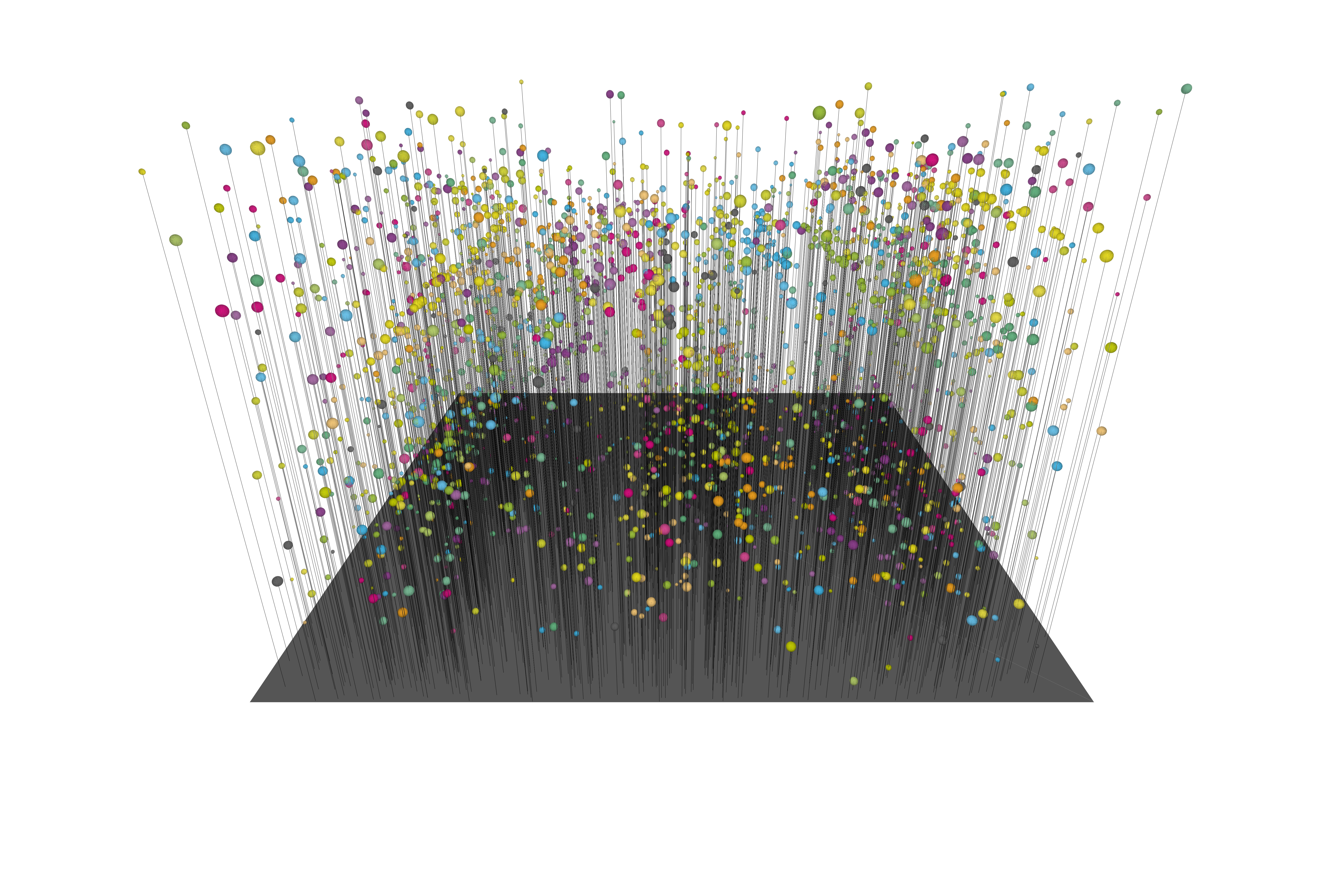
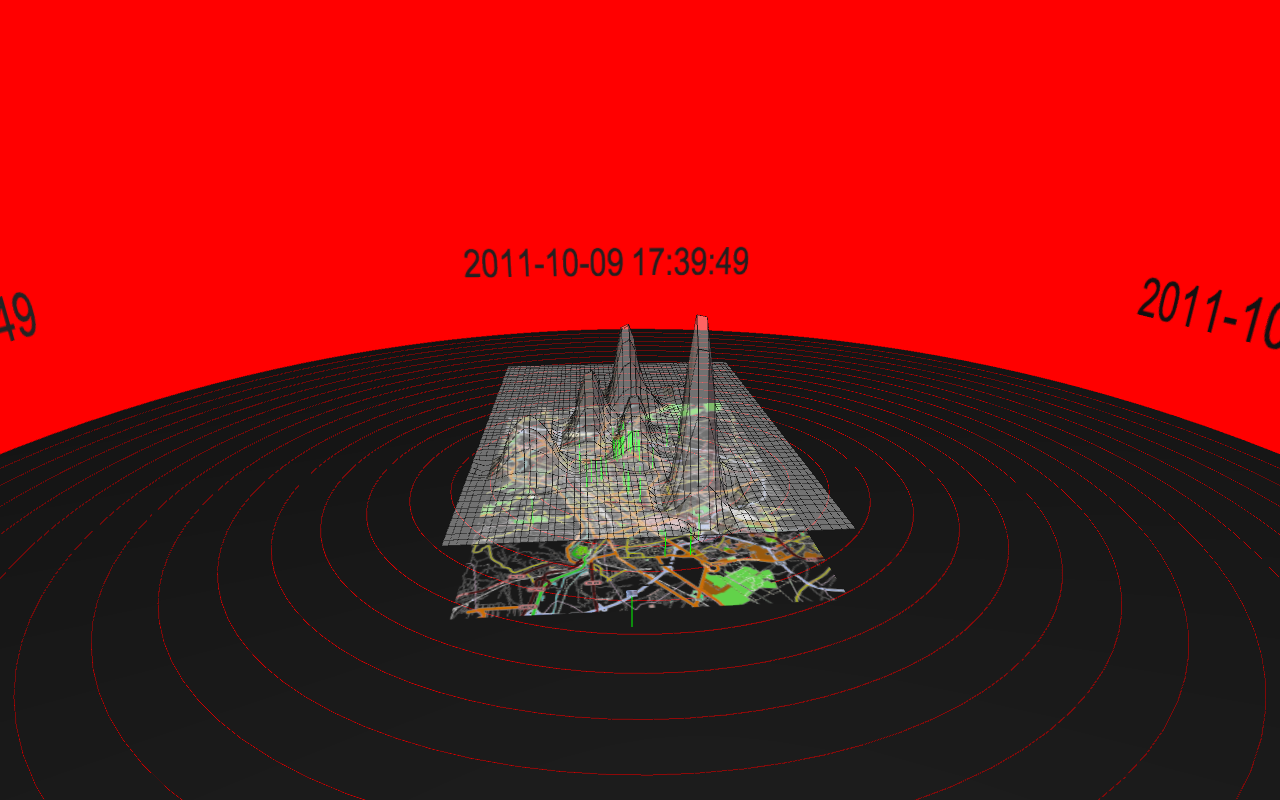
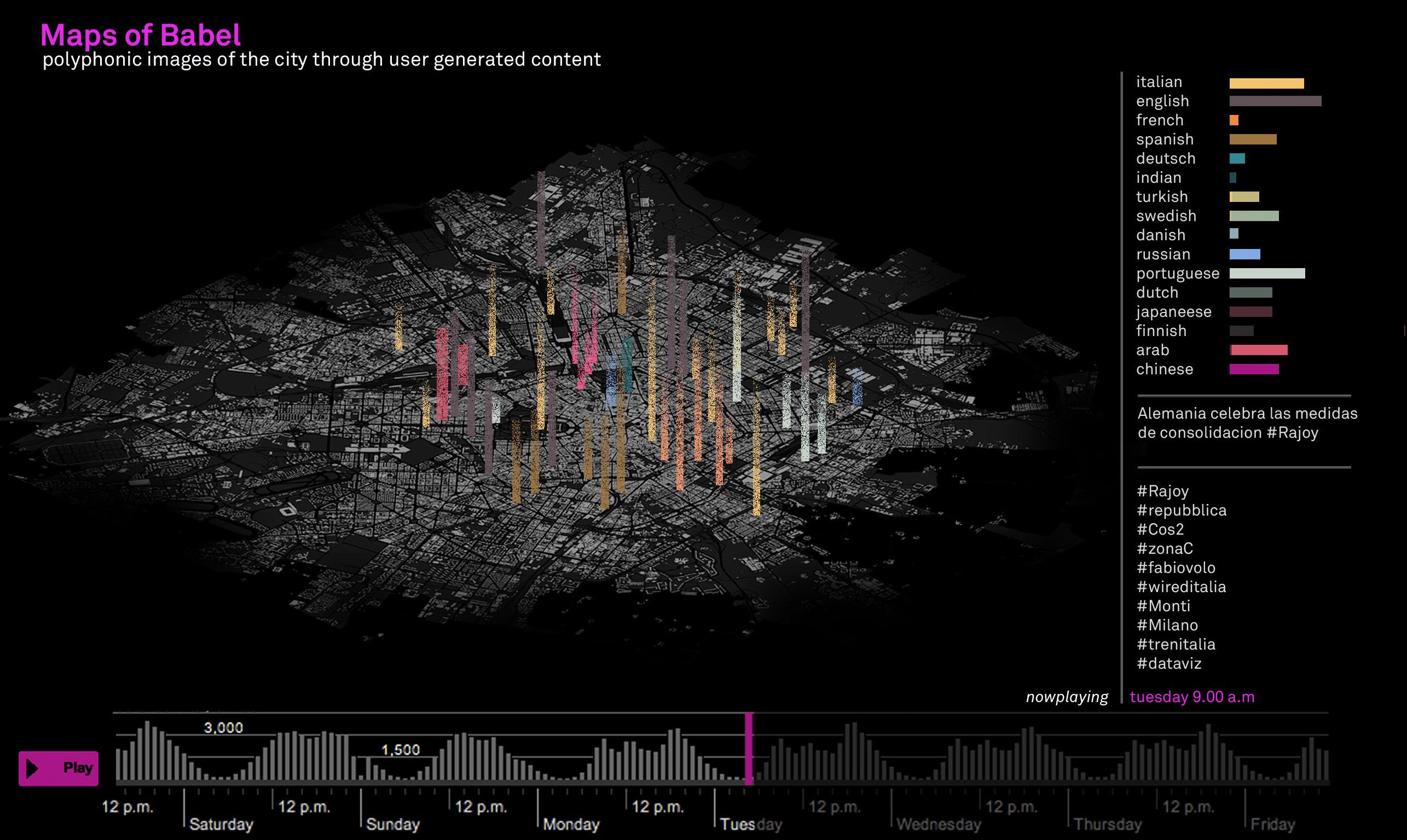
Is it possible to imagine novel forms of urban planning and of public policies regulating the ways in which people use city spaces by listening to citizens’ expressions, emotions, desires, and visions, as they ubiquitously emerge in real-time on social networks and on other sources of digital information? This chapter presents the theoretical and methodological approach, the investigation and research phases, the design and prototyping processes constituting the ConnectiCity initiative, a collaborative, multi-disciplinary series of projects in which artists, scientists, anthropologists, engineers, communicators, architects, and institutions participated to the design of innovative ubiquitous and pervasive systems which were able to transform the ways in which the concepts of urban planning and city-wide decision-making are defined. Novel forms of urban life were imagined, in which cities became the time/space continuum for multiple, stratified layers of information expressing the ideas, goals, visions, emotions, and forms of expression for multiple cultures and backgrounds, producing new opportunities for citizenship: more active, aware, and engaged in the production of urban reality, and in the transformation of city spaces into possibilistic frameworks.


the co-creation of the city

the co-creation of the city

Contact us for samples and extracts.

Citation:

Iaconesi, S., & Persico, O. (2013). The Co-Creation of the City. In N. Sappleton (Ed.), Advancing Research Methods with New Technologies (pp. 12-33). Hershey, PA: Information Science Reference. doi:10.4018/978-1-4666-3918-8.ch002

AOS at 18th International Conference on Urban Planning and Regional Development in the Information Society GeoMultimedia 2013

AOS will be at REAL CORP 2013, the 18th International Conference on Urban Planning and Regional Development in the Information Society GeoMultimedia 2013.

20-23 May 2013, Rome, Italy

House of Architecture
Piazza Manfredo Fanti, 47, 00185 Roma

Our contribution:

Interweaving the digital and analog lives of cities: urban sensing and user-generated cities

Abstract

A research process lasting from 2009 to 2012 has conceptualized, designed and implemented multiple tools and strategies to experiment novel forms of technologically-supported urban interaction. The goal of this process has been to understand the rituals which have started to shape contemporary citizens’ perception and performance of urban public and private spaces. An ethnographic approach has been used to gather insights about these emergent rituals, affecting the ways in which people have transformed the ways in which they work, learn, relate, consume, travel and entertain themselves in the city.

With the active collaboration of public administrations, organizations, citizen groups, tourist operators and research teams these practices have been enacted in the cities of Rome, Turin, Trieste, Cosenza, London, Berlin and Hong Kong for variable amounts of time. Engagement and results have been formally gathered, observed, processed and measured, allowing the research team to both explore the current scenario and envision new ones.

Real-time content harvesting from social networks, natural language analysis, geo-referencing/geo-coding/geo-parsing technologies, expert systems and ubiquitous technologies such as smartphones, custom electronic devices and conceptual consumer products have been employed to explore the ways in which people are and will be able to: perceive and understand their urban surroundings; access services and information; co-produce knowledge and distributed intelligence; collaborate in the creation of shared projects and city-governance practices; create and maintain peer-to-peer infrastructures for connectivity, commerce, services and culture.

This paper will present the initial analysis – including previous research taken into account in the fields of urban sensing, citizen science, urban planning, urban infrastructure management, urban environment perception and more –; the methodologies, both shared and project-specific, used to conceive, design, implement the prototypes and to measure their effects; the reports about each project in the aforementioned cities, including their usage on-the-field as well as elements of urban and digital ethnographic observation and user experience analysis; a description of a scenario for further research and for the production of service and product concepts, some of which are already in-progress, in the areas of the arts, culture, tourism and city administration.

What emerges is the opportunity to create multi-layered interactive landscapes in urban contexts which allow city dwellers to communicate, collaborate, govern their city, exchange knowledge and information, consume, entertain themselves, produce and distribute services.

Trieste Cloud City

Trieste Cloud City

Trieste Cloud City

Trieste Cloud City

Trieste Cloud City

Just published:

S. Iaconesi, O. Persico (2012). “Trieste Cloud City: la Città della Coda Lunga” in “Rivista degli Infortuni e delle Malattie Profossionali”, Vol. 2/2012, pp. 643–654. ISSN: 0035–5836.

http://www.artisopensource.net/2012/08/10/trieste-cloud-city-new-frontiers-of-urban-communication/

http://www.chefuturo.it/2012/08/il-turbine-di-idee-per-trasformare-trieste-in-una-cloud-city/

ConnectiCity: Living Cities in Berlin for re:publica

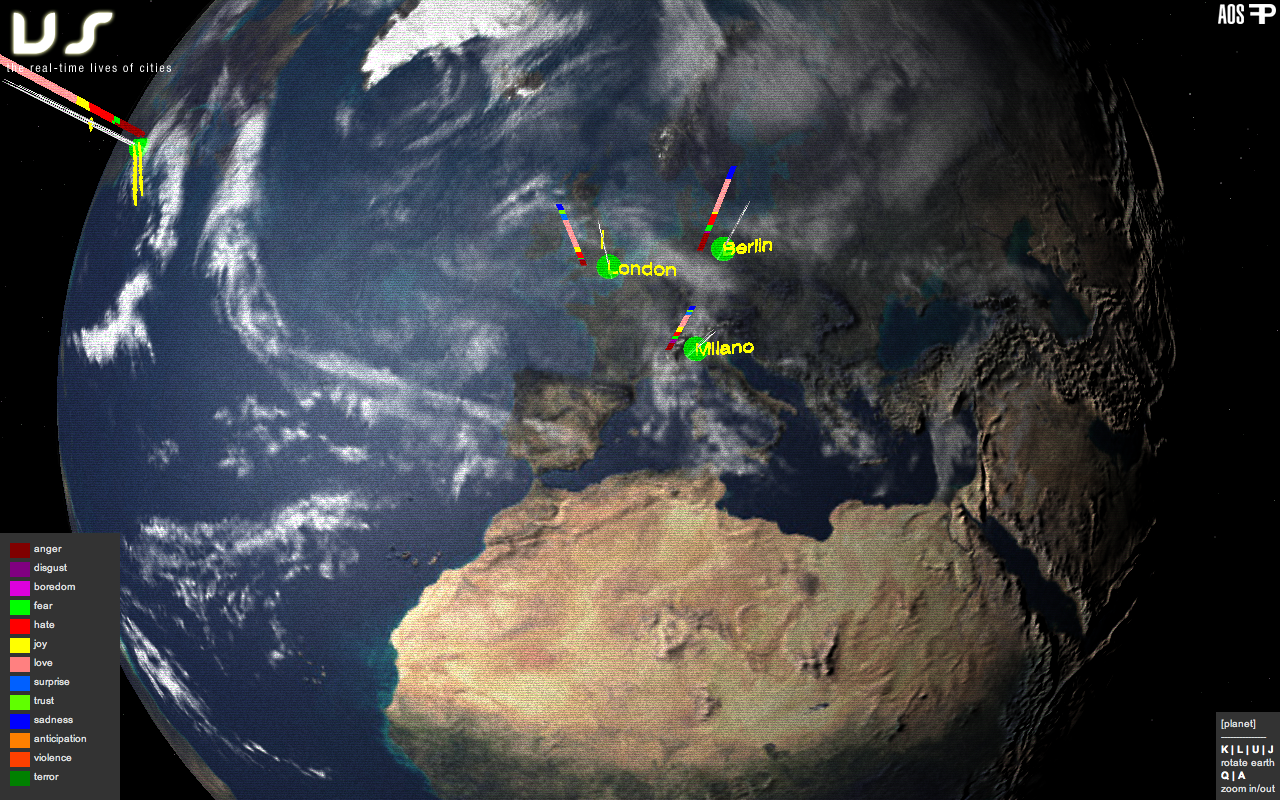
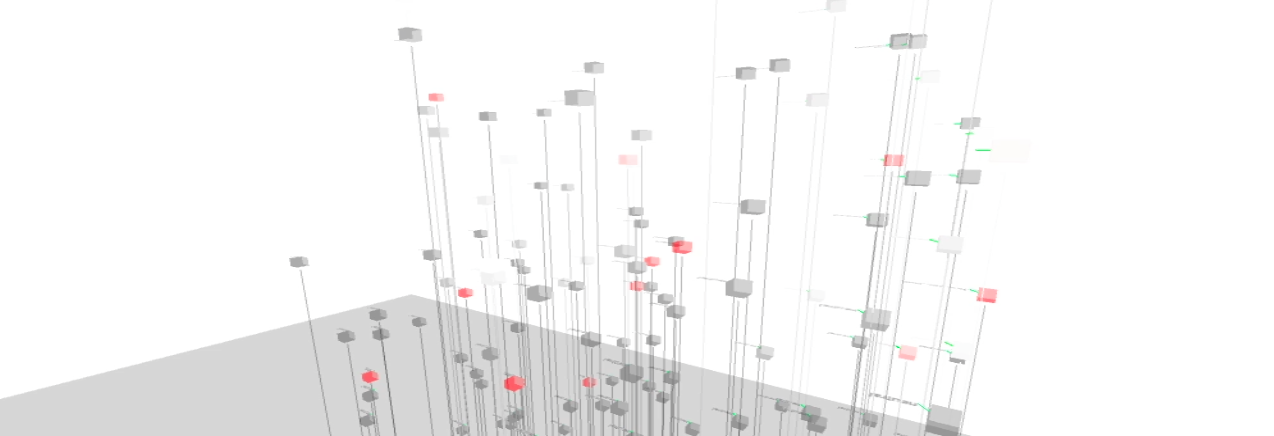
VersuS, city visualization

VersuS, city visualization

Lately we’ve teamed up with an impressive series of partners to investigate on the future of our cities.

On May 2nd – 4th we will be in Berlin for re:publica to gather up and summarize our efforts so far.

Re:publica represents an enormous convergence of individuals and organizations who are dedicating their efforts to the conceptualization and enactment of innovative scenarios for humanity, with specific focus on urban contexts, as the locations in which most part of the destinies of our territories and populations are shaped and put into action. And, accordingly, Action! is the slogan of the 2012 edition of Re:publica.

We will participate to two sections of the event:

In the panel SMART CITIES : (IN) VISIBLE CITIES we will discuss about the emergence of novel visions for the cities of our present and future.

Together with Susa Pop, of the Public Art Lab (who promoted and organized the panel), a keynote by Tim Edler, of realities:united, Martin Spindler, and Khaldoun Al Agha we will investigate on

“How could urban media as temporary communication platform facilitate the exchange between citizens to support the diversity of a city? How can we use the networked infrastructures for the shaping of a socio-cultural urban development? Due to our understanding of the human as crucial reference point for our future cities, the citizen centric model will be a key topic in this session.”

Then, in the roundtable URBAN MEDIA LOUNGE, organised with the kind support of Enterprise Europe Network Berlin-Brandenburg, we will join the project European Urban Media Network for Connecting Cities, a research on three visions for the city of the future: the Participatory City, analysing the communicative potential for community-building through urban media, the Visible City fostering a city that is intelligent, efficient and sustainable and the Networked City. (initiator: Public Art Lab, 2012 – 2016)

The Lounge will also host the launch of the publication Urban Media Cultures (release: April 2012, avedition).

In the roundtable we will present the initial concepts of the Living Cities project, a massive initiative that we initiated with an impressive list of partners to design and implement novel scenarios of the creation of participatory practices for city and community development in cities, focused on P2P models, participatory governance, digital inclusion policies and a high level of attention to the scenarios of diversity and multiculturalism, to create wellness, richness and opportunities in urban contexts. The project has not yet been disclosed, and will be officially presented at the event.

the Co-Creation of cities: AOS presents ConnectiCity in Florence at ECLAP Conference

VersuS, the co-creation of cities

VersuS, the co-creation of cities


Is it possible to imagine ways to use ubiquitous technologies and the emergent narratives which take place on social networks to design cities using co-creation practices?

On May 7th – 9th we will be in Florence at the ECLAP 2012 Conference on Information Technologies for Performing Arts, Media Access and Entertainment to discuss these issues.

We will participate with a paper and a research contribution in which we explore our most recent projects on the themes of Urban Sensing, Citizen Science, P2P Urbanism, and on novel ideas for the design of smart cities, more focused on the idea of human collaboration and relation than the “classical”, data-focused visions of smart cities.

Here below is the abstract of our intervention:

“Is it possible to imagine novel forms of urban planning and of public policies regulating the ways in which people use city spaces by listening to citizens’ expressions, emotions, desires and visions, as they ubiquitously emerge in real-time on social networks and on other sources of digital information?

This paper presents the theoretical and methodological approach, the investigation and research phases, the design and prototyping processes constituting the ConnectiCity initiative, a collaborative, multi-disciplinary series of projects in which artists, scientists, anthropologists, engineers, communicators, architects and institutions participated to the design of innovative ubiquitous and pervasive systems which were able to transform the ways in which the concepts of urban planning and city-wide decision-making are defined. Novel forms of urban life were imagined, in which cities became the time/space continuum for multiple, stratified layers of information expressing the ideas, goals, visions, emotions and forms of expression for multiple cultures and backgrounds, producing new opportunities for citizenship: more active, aware and engaged in the production of urban reality, and in the transformation of city spaces into possibilistic frameworks.”

A provisional programme of the ECLAP 2012 conference is available at the following link:

http://www.eclap.eu/drupal/?q=node/65281