Heretical Enterprises?

What is an Heretical Enterprise?

From ereticamente.it:

“The term “heresy” comes from the greek word αἵρεσις, haìresis, deriving from the verb αἱρέω (hairèō, “to grab”, “to take” but, also, “to choose” or “to elect”). Originally, heretic were the ones who chose, the ones who were able to evaluate many options before choosing one of them.”

According to this meaning, the Gathering of the Heretical Enterprises (Raduno delle Imprese Eretiche, in Italian) focuses its attention on those forms of innovation whose practices are able to ask questions that challenge the status quo, to make informed choices which are often difficult to make, but which are the result of the evaluation of a plurality of points of view.

The Gathering represents an important happening for the historically fragile south of Italy, and is one of the finest moments in which innovators from all over the country are able to freely converge to talk about their practices, about the business, social, political models which they enact in their activity, and which have proved to be most successful in achieving the best possible results for their communities and in the territories and cities they live in.

And, maybe most important of all, to envision the possibilities in this kind of practices, the ones which emerge when people realize that it is of fundamental importance to feel as part of a society whose main interest is the well-being of its members, from multiple points of view – social, environmental, cultural… –, and that this result can only be achieved by using collaborative, participative, positive, active practices which combine shared, peer-to-peer models.

The Second Gathering of the Heretical Enterprises (Secondo Raduno delle Imprese Eretiche ) will be held in Villaggio Mancuso  (Taverna, in the province of Cosenza) on the 16th and 17th of March 2013, and it will feature an impressive program.

We would have liked to be physically there, but for a series of reasons we will not be able to participate physically, but will be there with a digitally with a video-conference in which we will talk about our experiences in the practices of participation and collaboration, about our focus on human-centered smart cities, and about our philosophy in approaching peer-to-peer models in business and society.

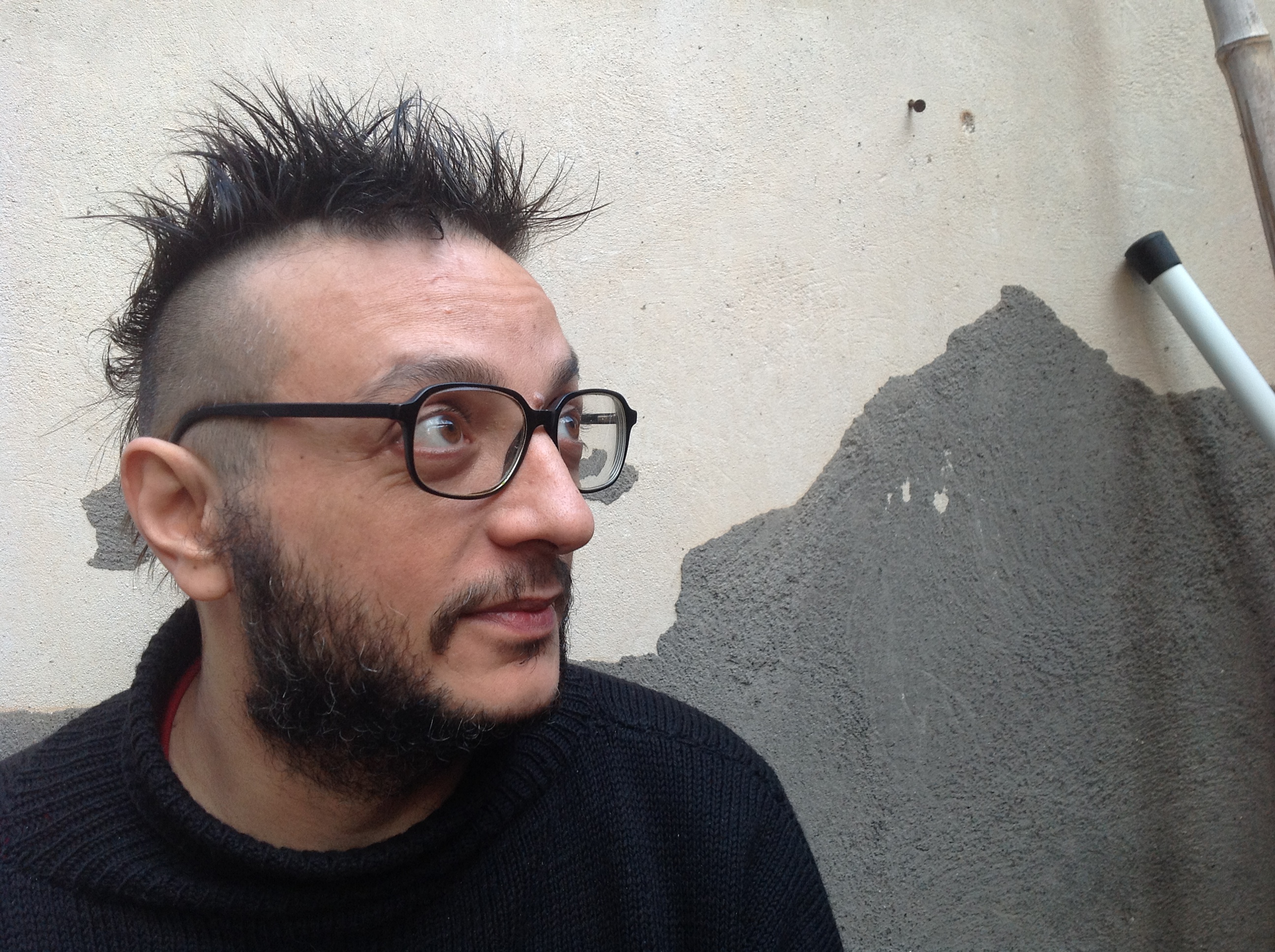
Salvatore Iaconesi for AOS at the Gathering of Heretical Enterprises

Salvatore Iaconesi for AOS at the Gathering of Heretical Enterprises

architettura rel:attiva

just back from Mexico where me and penelope.di.pixel performed quite a few activities: a congress on the revitalization of the historical centers, a panel on virtual, participative and interactive architectures and on innovation, and an installation performance called rel:attiva presenza.

architettura rel:attiva in Mexico City

architettura rel:attiva in Mexico City

The Seventh International Meeting on the Revitalization of the Historical Centers (27-28-29th of October 2008) was organized by the INAH in collaboration with the Spanish Cultural Center in Mexico, with the Italian Cultural Institute in Mexico and with the Italian and Spanish embassies.

This year’s edition of the congress focused on the theme “today’s  architecture as mediator of the historical and contemporary city“.

Many illustrous and international participants attended the meeting: Guillermo Vázquez de Consuegra (Spain), Teodoro González de León (Mexico), Felipe Leal (Mexico), Mario Coyula (Cuba), Maria Elisa Costa (Brasil), Augusto Quijano (Mexico), and an incredibly significative Carlo Aymonino, a central figure of Italy’s and international’s architectonic neorealism, providing for an incredible set of professional competences and personal histories.

We were infiltrates, just as usual, and were the only not-architects making a presentation. :)

The congress took place at the beautiful Franz Mayer Museum, with its incredible cloister, showing the evident signs of 1985′s earthquake.

What emerged from these intense 3 days of discussion was a really live debate on the conception of the city.

While most architects had no problems in conceptualizing a definition of architecture that includes the concepts of form and function, the impact of a our “little” semantic shift proved out to be quite a surprise, provoking deep interest and deep oppositions. It sure didn’t leave people unresponsive.

Our architettura rel:attiva discussed the point of view of the hybridization of practices and of disciplines, of the integration of the immaterial domains of reality brought on by the digital technologies and cultures, on collaborative practices applied to urban design and intervention, and on a general conception of a live metropolis, built from concrete and steel just as it is built on people, relationships, emotion and an active, collaborative way of life.

What we proposed, thus, was the idea of an architecture that was not only about the shapes of buildings and about their historical values, but also about the possibility for them to become tools, mediators and enablers of new social, anthropological, economic, relational, sensorial and emotional practices enabled in the contemporary era by digital technologies.

We talked about an anthropological, communicational, interactive, relational architecture. Which, for most of the classically architects was a shock.

In most cases the immaterial and virtual domains of reality enabled by technology are perceived just as tools to reconstruct and re-enact historical artifacts, to virtually rebuild, for example, the Roman Forum of the Templo Mayor in Mexico city so that people can walk through them and see/hear the “things of the past”.

Which is, by the way, a perfectly honest and interesting thing to do :)  but it leaves out all of the other possibilities in terms of social, business and relational models that could be enabled by the metropolis itself if spaces integrated technologies to create a truly ecosystemic environment in which interaction possibilities could turn into instruments for politics, culture, inspiration and expression.

architettura_rel_attiva_definitiva

THIS is the PDF of the architettura rel:attiva theories. It is only in italian for now: we will translate it into English, Spanish and French in a bit, stay tuned.

check out the rewiew on artsblog.

the review on Networked Performance ( turbulence.org)

here below are some pictures from the event. Stay tuned for the report of the installation of the rel:attiva presenza, coming up next.