Advancing digital technologies continue to shape all aspects of our society, with particular impact on the professional research community. These new and exciting developments offer considerable advantages in terms of speed, access connectivity, and economy.
Advancing Research Methods with New Technologies examines the applicability and usefulness of new technologies, as well as the pitfalls of these methods in academic research practices. This book serves as a practical guide for designing and conduction research projects for scientists all of disciplines ranging from graduate students to professors and practitioners.
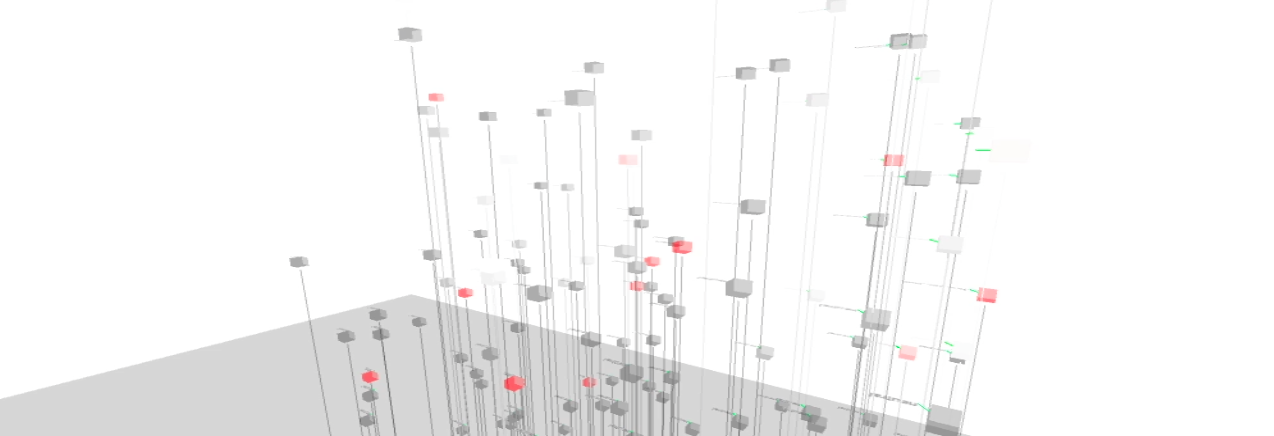
Is it possible to imagine novel forms of urban planning and of public policies regulating the ways in which people use city spaces by listening to citizens’ expressions, emotions, desires, and visions, as they ubiquitously emerge in real-time on social networks and on other sources of digital information? This chapter presents the theoretical and methodological approach, the investigation and research phases, the design and prototyping processes constituting the ConnectiCity initiative, a collaborative, multi-disciplinary series of projects in which artists, scientists, anthropologists, engineers, communicators, architects, and institutions participated to the design of innovative ubiquitous and pervasive systems which were able to transform the ways in which the concepts of urban planning and city-wide decision-making are defined. Novel forms of urban life were imagined, in which cities became the time/space continuum for multiple, stratified layers of information expressing the ideas, goals, visions, emotions, and forms of expression for multiple cultures and backgrounds, producing new opportunities for citizenship: more active, aware, and engaged in the production of urban reality, and in the transformation of city spaces into possibilistic frameworks.
the co-creation of the city
Contact us for samples and extracts.
Citation:
Iaconesi, S., & Persico, O. (2013). The Co-Creation of the City. In N. Sappleton (Ed.), Advancing Research Methods with New Technologies (pp. 12-33). Hershey, PA: Information Science Reference. doi:10.4018/978-1-4666-3918-8.ch002
AOS will be at REAL CORP 2013, the 18th International Conference on Urban Planning and Regional Development in the Information Society GeoMultimedia 2013.
20-23 May 2013, Rome, Italy
House of Architecture Piazza Manfredo Fanti, 47, 00185 Roma
Our contribution:
Interweaving the digital and analog lives of cities: urban sensing and user-generated cities
Abstract –
A research process lasting from 2009 to 2012 has conceptualized, designed and implemented multiple tools and strategies to experiment novel forms of technologically-supported urban interaction. The goal of this process has been to understand the rituals which have started to shape contemporary citizens’ perception and performance of urban public and private spaces. An ethnographic approach has been used to gather insights about these emergent rituals, affecting the ways in which people have transformed the ways in which they work, learn, relate, consume, travel and entertain themselves in the city.
With the active collaboration of public administrations, organizations, citizen groups, tourist operators and research teams these practices have been enacted in the cities of Rome, Turin, Trieste, Cosenza, London, Berlin and Hong Kong for variable amounts of time. Engagement and results have been formally gathered, observed, processed and measured, allowing the research team to both explore the current scenario and envision new ones.
Real-time content harvesting from social networks, natural language analysis, geo-referencing/geo-coding/geo-parsing technologies, expert systems and ubiquitous technologies such as smartphones, custom electronic devices and conceptual consumer products have been employed to explore the ways in which people are and will be able to: perceive and understand their urban surroundings; access services and information; co-produce knowledge and distributed intelligence; collaborate in the creation of shared projects and city-governance practices; create and maintain peer-to-peer infrastructures for connectivity, commerce, services and culture.
This paper will present the initial analysis – including previous research taken into account in the fields of urban sensing, citizen science, urban planning, urban infrastructure management, urban environment perception and more –; the methodologies, both shared and project-specific, used to conceive, design, implement the prototypes and to measure their effects; the reports about each project in the aforementioned cities, including their usage on-the-field as well as elements of urban and digital ethnographic observation and user experience analysis; a description of a scenario for further research and for the production of service and product concepts, some of which are already in-progress, in the areas of the arts, culture, tourism and city administration.
What emerges is the opportunity to create multi-layered interactive landscapes in urban contexts which allow city dwellers to communicate, collaborate, govern their city, exchange knowledge and information, consume, entertain themselves, produce and distribute services.
Salvatore Iaconesi will be on his Eisenhower Fellowship to explore the changing scenarios of leadership in the US, and to understand the opportunities for collaboration and exchange among the arts, sciences, humanities, businesses and public policies.
“identifies, empowers and links outstanding leaders from around the world, helping them to achieve consequential outcomes across sectors and borders. EF provides a transformational experience leading to lifetime engagement in a global network, where dialogue and collaboration make the world more prosperous, just and peaceful.”
Art is Open Source, through Salvatore Iaconesi, will be on the fellowship to explore various types of scenarios.
As we know, everything around us is changing at incredible speed.
The ways in which we learn, express, collaborate, work, consume, relate, exchange information, knowledge and wisdom are very different from they were even a few years ago.
Touched by the impact of digital cultures, the world has mutated and continues in this transformation.
This has extreme, radical impacts on human societies and on the ways in which we can imagine shaping our public policies: our perception of private and public spaces has changed, just as much as what we perceive to be legal/illegal, possible/impossible, suggested/forbidden. Just as our visions, imaginaries, opportunities.
We are in a situation in which giving answers has become not only very difficult, but also not very interesting. What is interesting, today, is to understand what the fundamental questions are, and to create open spaces for discussion, and for their continuous, iterative, participative assessment.
Many signals exist around us that can help to observe – just like anthropologists, ethnographers and cultural geographers – the ways in which things are changing in human societies. These signals can be collected in large quantities and observed according to a series of different approaches: for business, science, art, research, culture, commerce, policies…
We can also imagine collecting these signals to enact some form of forecast.
Possibly the most interesting thing which we can do is to take these signals into account to observe our present and what it says about our near-future, to see which new daily rituals they describe, new ways of doing things, new habits, new things that we have learned to give for granted, or that we have forgotten about.
And to use these observations to create things, be them objects, products, services, processes: real ones, possibly under the form of live prototypes that can be used to inspire further, materialized observations about our near-future.
Some call if Design Fiction, some call it near-future design: what is certain is that it is a practice that needs the contribution of the artist just as the ones of the scientist; of the engineer and the poet; of the businessman and the designer; of the anthropologist and the architect; of the technologist and the politician. In a joint effort to understand, create and leverage the layers of meaning emerging from our human societies.
This is what we will do during this Eisenhower Fellowship, collecting the experiences of leaders throughout the USA, suggesting change and creating the opportunities for exchange and collaboration for a better understanding of our present and of what will come up next.
“Economy is in crisis, both in Italy and in the rest of the world. The system has to radically change to survive. The biggest problem is not in the lack of ideas (which are abundant on the Net) or in the lack of practical proposals (for technological innovation is so fast), and neither in the lack of people who are willing to enact change (young managers and leaders are rapidly changing their values, dedicating themselves to societal issues). What is missing is a new organizational model: a new philosophy for enterprises which is able to capitalize resources and give them a new direction. This is Societing. Cova and Fabris have already shown how modern marketing – the one dedicated to achieving mass sales – is a thing of the past. The authors of this book assert how consumers are becoming progressively more producers, and describe the ways in which they are transforming commodities in one of many possible types of means of production. Reality is way more radical: Societing has to be reset (reloaded) with new meanings and to investigate the present to escape a crisis which has no future.”
We at AOS have contributed a chapter about the emergence of ubiquitous, peer-to-peer, forms of intelligence in the city, and on its effects and transformations on how people learn, work, express, collaborate, communicate, relate and perceive their environment: the co-creation of the city.
S. Iaconesi, O. Persico (2013). Societing and the Co-Creation of the City. in A. Giordano (ed.), A. Arvidsson (ed), “Societing Reloaded”. Milan, Italy: Egea. ISBN/EAN: 9788823833401
Here we will present the updates for our research projects dedicated to the real-time observation of cities: ConnectiCity and VersuS.
With these two projects we have tried understand the current transformation of urban contexts and in the ways in which citizens learn, work, relate, consume and are aware about their environment.
ConnectiCity, the Atlas of Rome
We have started our analysis by observing how the affordances of space are generated at different levels, such as social, cultural, political, administrative and relational, defining in our perception what is possible, impossible, suggested, advised against, prohibited.
Mobile devices transform our perception of space, time and relations.
Landmark consumer products such as the Sony Walkman have opened up the way for the possibility to personalize our experience of public space. While we walked through cities, devices like the Walkman allowed us to reinterpret space and reconfigure it, transforming it into places of our emotion, fantasy or memory.
Mobile devices, such as cell phones and smartphones, radicalize this process.
While running in a park a mobile phone call will be able to completely transform our perception of space, which could become – even for a limited amount of time – an ubiquitous office, a global living room or a place for distributed entertainment, emotion, relation.
Citizens have started using digital technologies and networks to express their ideas, visions, wishes, emotions and expectations.
I have an idea… on social networks in 2011
This image above represents (in red) the locations of many (over 7 million) internet users who, in 2011, have used social networks (Facebook, Twitter, Foursquare, Instagram, Google+) to say “I have an idea!” (e.g.: messages in one of 29 languages expressing the sentence “I have an idea” or one of dozens of variations) and at least 3 other users replied to them (in meaningful ways, including comments, ways to make the idea better or offers for collaboration, as understood by an automatic natural language analysis of the follow-up posts).
turin redrawn using social media
In this image above we can see the city of Turin completely drawn through social media and user generated content (starting from a black canvas, every time a geolocated user generated content is sensed on Facebook, Twitter, Instagram and Foursquare, a corresponding pixel is augmented in saturation; this process has been done throughout August, September, October and November 2011 to obtain the result visible in the image).
From these and other examples it is possible to see how citizens are constantly using social media to express themselves in city spaces, describing their points of view on fundamental topics such as mobility, ecology, job market, emotions, consumption, entertainment, culture.
Through the ConnectiCity and VersuS projects we tried to design and develop systems which are able to capture this emergent user-generated information and transform it into usable knowledge for citizens, administrations, activists and companies.
Many results have been produced including:
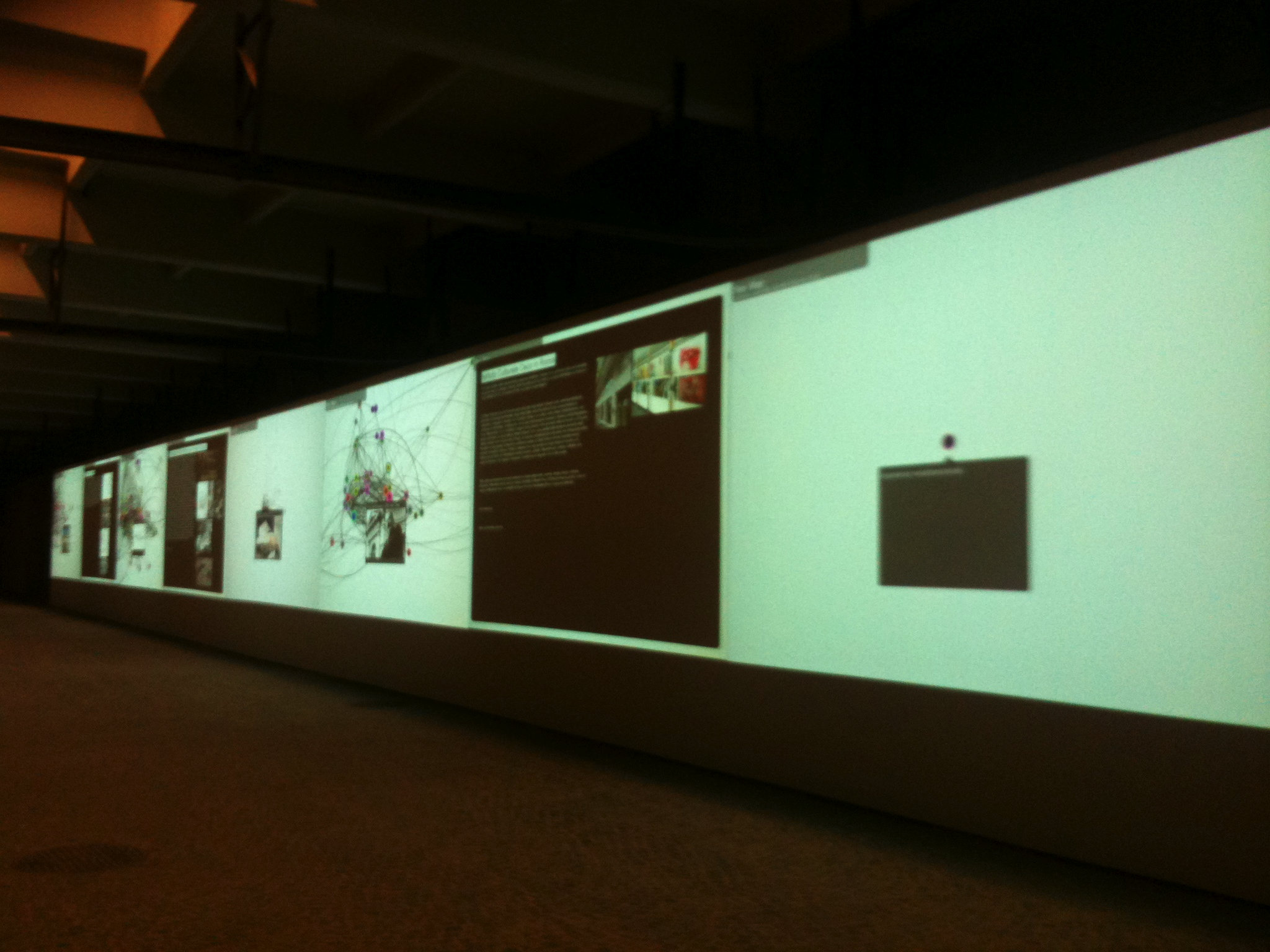
the Atlas of Rome, a 35 meter urban screen capturing in real time the ideas, desires, visions and expectations of citizens of the city of Rome
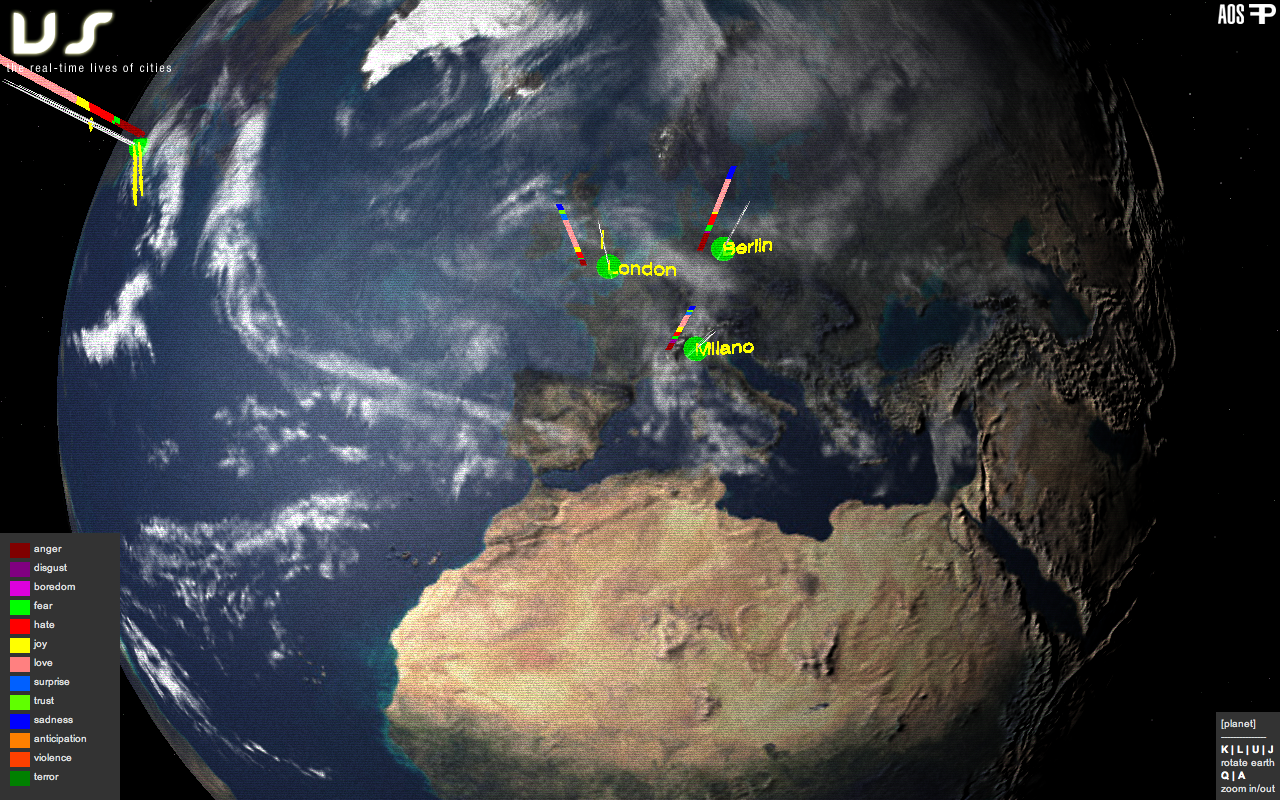
VersuS, a realtime system which can visualize and explain the ways in which citizens use social media to express themselves about fundamental issues for the city
VersuS planet edition, dedicated to the possibility to observe and compare multiple cities
Maps of Babel, in which cities can be observed to gain better understandings about the ways in which different cultures and nationalities express and relate in cities
The first one is a system which is designed for violent or emergency scenarios in cities (such as riots, earthquakes, natural disasters…). A realtime system collects information generated through social networks and parses them usingNatural Language Analysisto understand the locations (through GPS and Geographical Named Entities) of violent, dangerous, emergent events, or of safe locations, places of first assistance and, in general, safe spots or way outs of difficult situations.
This information is made accessible to users through a special interface, designed for use in emergency situations, where an immediate, thought free information visualization can make the difference in allowing people to react quickly and effectively: an Augmented Reality display shows a color coded arrow; scan from left to right to understand the safest way out or the nearest safe spot, as inferred from the information provided by users (and, eventually, by institutions and organizations) on social networks, in real time. Red means danger, green means safe.
Hatemeter
The second one, the HateMeter, uses the same technologies to identify the direction in which a certain emotion (“Hate” in the presented prototype) is strongest, as inferred in realtime by harvesting user generated content on Facebook, Twitter, Instagram, Foursquare.
Both applications provide scenarios according to which the forms of emergent expression enacted by users across cultures and languages can be used to produce useful, usable information, available in accessible ways, designed to transform our perception of public space and redefining the concepts of citizenship, transforming it into a more active, informed agency.
This series of projects will be our main focus for the next few months. We welcome suggestions, collaborations and ideas for novel forms usage scenarios.