Realtime cities at the MACRO Museum in Rome for Audiovisioni Digitali

Art is Open Source will be featured at “Audiovisioni Digitali“, curated by  Lino Strangis and Veronica D’Auria, with this video above about the realtime digital lives of cities.

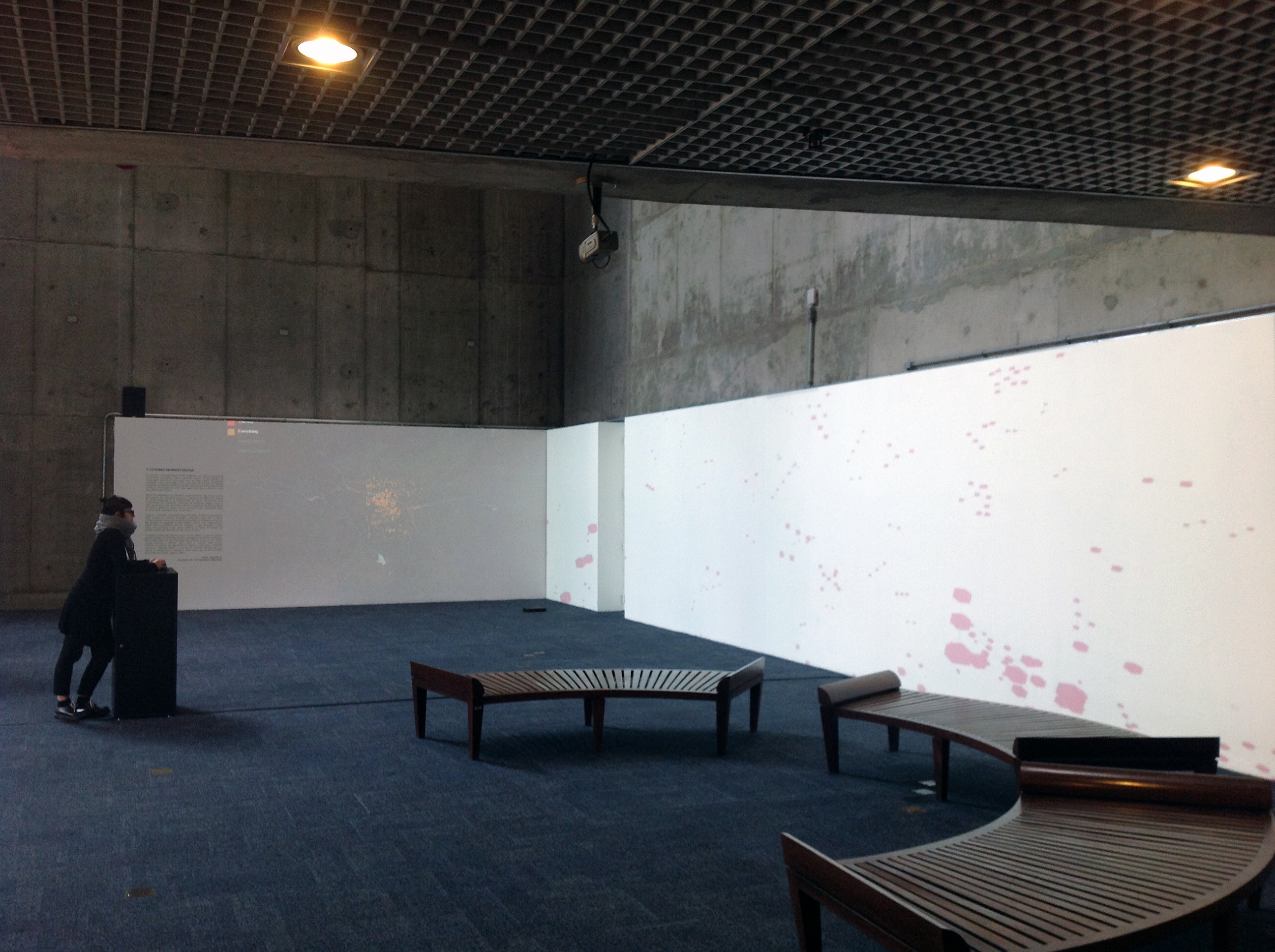
Audiovisioni Digitali at MACRO

Audiovisioni Digitali at MACRO

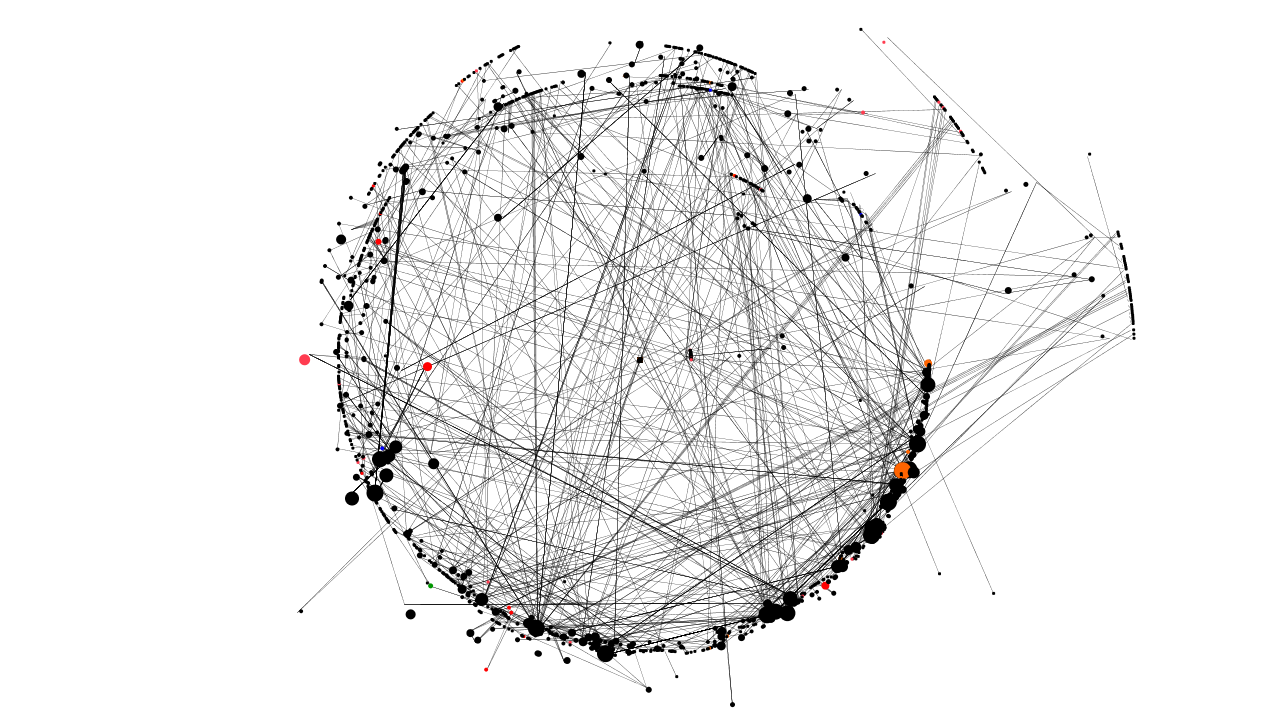
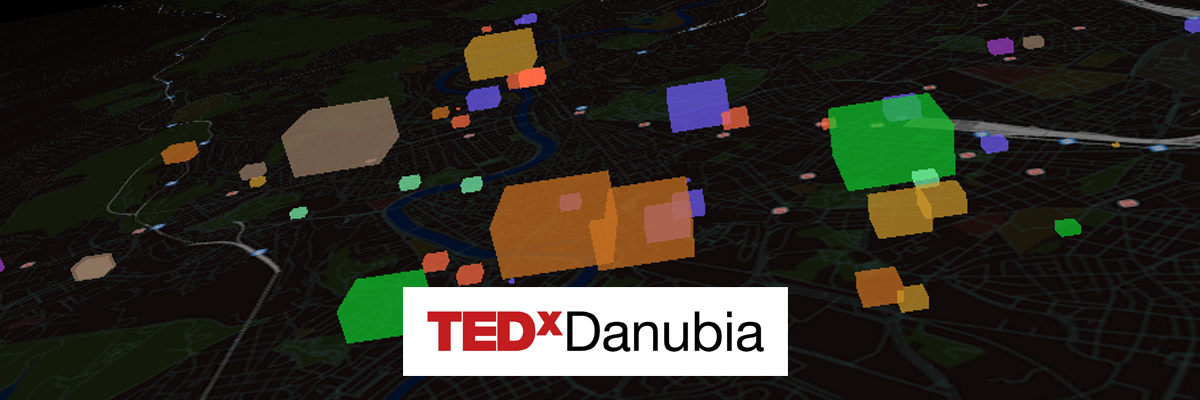
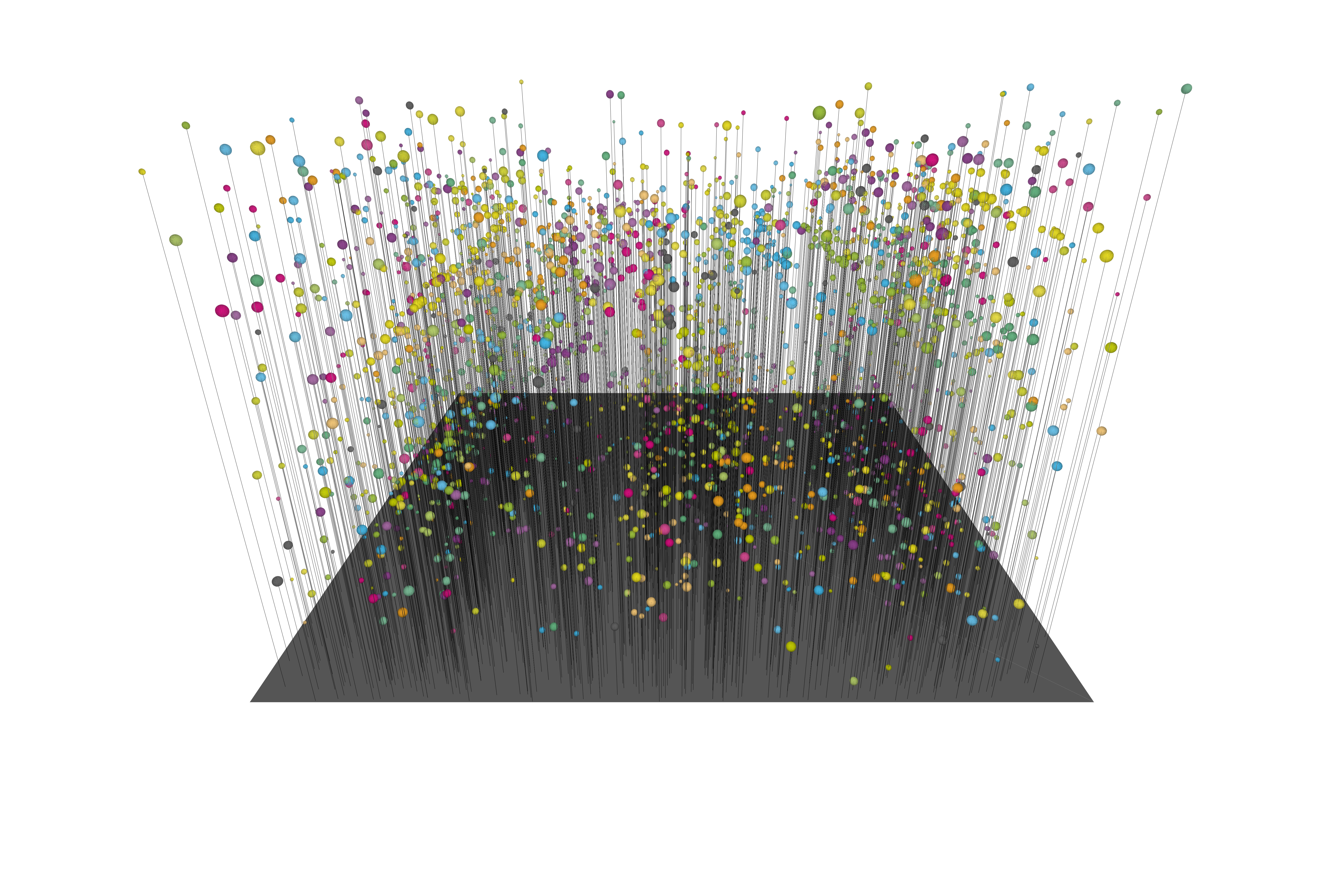
The video has been selected by Giovanni Viceconte from the ArtHub archives and shows a typical day in the digital life of the city of Trieste, composed by capturing a full day of social network activity generated in the city of Trieste on Facebook, Twitter, Instagram, Youtube, Google+. Each dot in the video represent one digital interaction on social networks: maybe a post, comment, video, image or text published by someone in the city. When dots connect, it means that a conversation/relation of some sort started between users: a comment, a sharing, a re-publishing.

What emerges is a complex, living diagram, which shows the organic digital life of the city, a map of the town which is not composed by streets and buildings, but rather from human relations and immaterial content and information. The city transforms, merging people’s physical experience of its public and private spaces with the digital ones.

Here is the info about the event:

Audiovisioni digitali
video e ricerca artistica oggi

curated by Lino Strangis and Veronica D’Auria

Friday January 18th 2013, 6pm and
Saturday January 19th 2013, 11am

MACRO – Contemporary Art Museum of the City of Rome
via Reggio Emilia 54, Rome, ItalyLino Strangis, A new Big Bang

ITALIAN Press Release

Art Hub Artists – selected by Giovanni Viceconte:
Gabriele Pesci, Lino Strangis, Nicola Bettale, Dario Lazzaretto, Lello Masucci, Diego Caglioni, Mauro Rescigno, Donato Maniello, Piero Chiariello, Toba Toba, Colette Baraldi, Barbara Agreste, Rebecca Agnes, Luca Lumaca, Salvatore Iaconesi, Otolab, Sonia Laura Armaniaco e Igor Imhoff.

http://www.arthub.it/index.php?action=pagina&idpag=1357747974


C.A.R.M.A. Artists – selected by Le Momo Electronique:

Rebecca Agnes, Alessandro Amaducci, Piero Chiariello, Nhieu Do, Guglielmo Emmolo, Mattias Harestam, Igor Imhoff, Gabriele Pesci, Arash Radpour, Mauro Rescigno e Lino Strangis.


MACRO, Sala Cinema, via Reggio Emilia 54, Roma

Venerdì 18 gennaio dalle 18:00 alle 21:00; Sabato 19 gennaio dalle 11:00 alle 22:00

www.museomacro.org+39 06 67 10 70 400


C.A.R.M.A.,

www.carmaweb.org,

http://www.facebook.com/assCARMAinfo@carmaweb.org


Press Office

Veronica D’Auria, 349 2304021veronica.dauria@gmail.com

ConnectiCity: Living Cities in Berlin for re:publica

VersuS, city visualization

VersuS, city visualization

Lately we’ve teamed up with an impressive series of partners to investigate on the future of our cities.

On May 2nd – 4th we will be in Berlin for re:publica to gather up and summarize our efforts so far.

Re:publica represents an enormous convergence of individuals and organizations who are dedicating their efforts to the conceptualization and enactment of innovative scenarios for humanity, with specific focus on urban contexts, as the locations in which most part of the destinies of our territories and populations are shaped and put into action. And, accordingly, Action! is the slogan of the 2012 edition of Re:publica.

We will participate to two sections of the event:

In the panel SMART CITIES : (IN) VISIBLE CITIES we will discuss about the emergence of novel visions for the cities of our present and future.

Together with Susa Pop, of the Public Art Lab (who promoted and organized the panel), a keynote by Tim Edler, of realities:united, Martin Spindler, and Khaldoun Al Agha we will investigate on

“How could urban media as temporary communication platform facilitate the exchange between citizens to support the diversity of a city? How can we use the networked infrastructures for the shaping of a socio-cultural urban development? Due to our understanding of the human as crucial reference point for our future cities, the citizen centric model will be a key topic in this session.”

Then, in the roundtable URBAN MEDIA LOUNGE, organised with the kind support of Enterprise Europe Network Berlin-Brandenburg, we will join the project European Urban Media Network for Connecting Cities, a research on three visions for the city of the future: the Participatory City, analysing the communicative potential for community-building through urban media, the Visible City fostering a city that is intelligent, efficient and sustainable and the Networked City. (initiator: Public Art Lab, 2012 – 2016)

The Lounge will also host the launch of the publication Urban Media Cultures (release: April 2012, avedition).

In the roundtable we will present the initial concepts of the Living Cities project, a massive initiative that we initiated with an impressive list of partners to design and implement novel scenarios of the creation of participatory practices for city and community development in cities, focused on P2P models, participatory governance, digital inclusion policies and a high level of attention to the scenarios of diversity and multiculturalism, to create wellness, richness and opportunities in urban contexts. The project has not yet been disclosed, and will be officially presented at the event.

the Co-Creation of cities: AOS presents ConnectiCity in Florence at ECLAP Conference

VersuS, the co-creation of cities

VersuS, the co-creation of cities


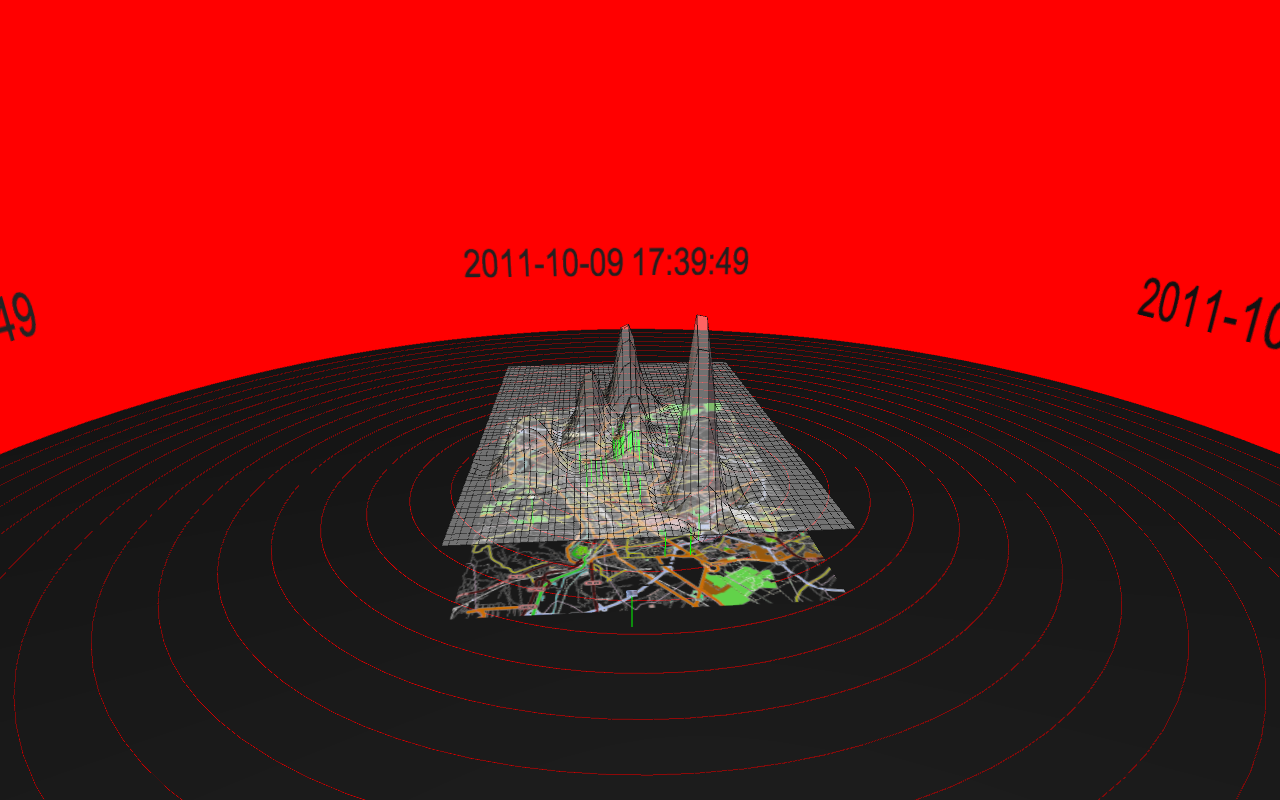
Is it possible to imagine ways to use ubiquitous technologies and the emergent narratives which take place on social networks to design cities using co-creation practices?

On May 7th – 9th we will be in Florence at the ECLAP 2012 Conference on Information Technologies for Performing Arts, Media Access and Entertainment to discuss these issues.

We will participate with a paper and a research contribution in which we explore our most recent projects on the themes of Urban Sensing, Citizen Science, P2P Urbanism, and on novel ideas for the design of smart cities, more focused on the idea of human collaboration and relation than the “classical”, data-focused visions of smart cities.

Here below is the abstract of our intervention:

“Is it possible to imagine novel forms of urban planning and of public policies regulating the ways in which people use city spaces by listening to citizens’ expressions, emotions, desires and visions, as they ubiquitously emerge in real-time on social networks and on other sources of digital information?

This paper presents the theoretical and methodological approach, the investigation and research phases, the design and prototyping processes constituting the ConnectiCity initiative, a collaborative, multi-disciplinary series of projects in which artists, scientists, anthropologists, engineers, communicators, architects and institutions participated to the design of innovative ubiquitous and pervasive systems which were able to transform the ways in which the concepts of urban planning and city-wide decision-making are defined. Novel forms of urban life were imagined, in which cities became the time/space continuum for multiple, stratified layers of information expressing the ideas, goals, visions, emotions and forms of expression for multiple cultures and backgrounds, producing new opportunities for citizenship: more active, aware and engaged in the production of urban reality, and in the transformation of city spaces into possibilistic frameworks.”

A provisional programme of the ECLAP 2012 conference is available at the following link:

http://www.eclap.eu/drupal/?q=node/65281


Maps of Babel at Human Cities Symposium

We just presented our Maps of Babel project at the Human Cities Symposium in Bruxelles.

maps of babel

maps of babel

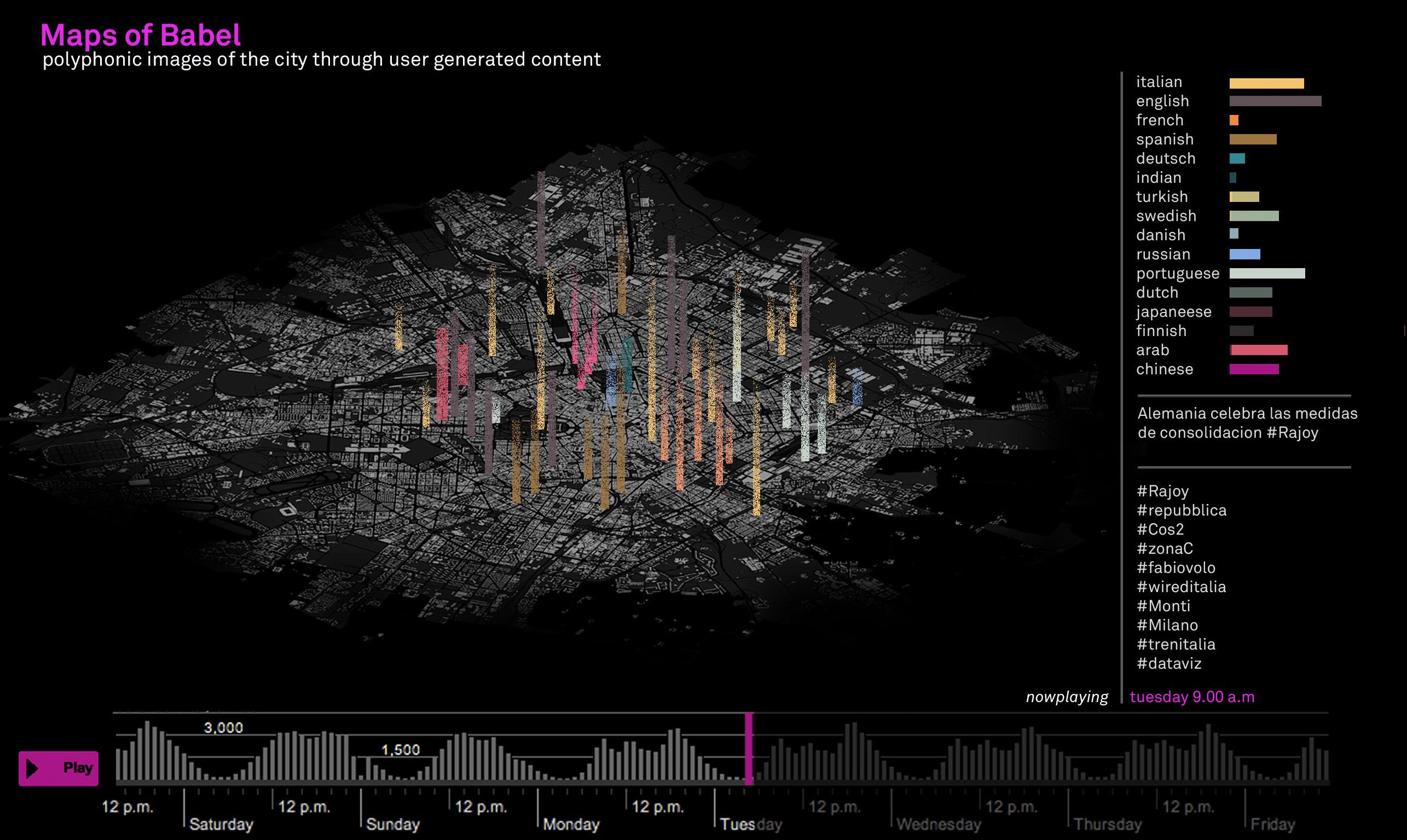
The Maps of Babel project is an effort we embraced after our experience with the VersuS and ConnectiCity projects.

Our original projects focused on very wide-angled objectives, dedicating all efforts to the creation of systems and experiences through which it is possible to observe and (try to) understand the impacts that the wide and ubiquitous availability of digital technologies and networks has on the ways in which we perceive and use our city spaces and on the ways in which we relate, learn, work and entertain ourselves.

With Maps of Babel ( as well as with other experimental research projects we have recently brought up or participated to, such as the projects which you can find HERE and which we are doing together with Luca Simeone, Giorgia Lupi and Paolo Patelli, together with Milan’s Polytechnic University, its Department of Architecture and Planning, Density Design and Accurat) we started focusing on more specific perspectives, trying to address real-life issues of our cities, and we started from the practices of Urban Planning.

This is the abstract of the paper we presented at Human Cities:

“Urban design and planning literature stresses the role of and need for meaningful urban public spaces for the experience of public life and social interaction. How to determine relationships between specific public places, their physical characteristics and the patterns of social activities they support, in order to promote meaningful innovation in terms of urban design and planning? How can we discover denizens’ perceptions that are affecting their urban experience? From what observations can we deduce what makes denizens satisfied? How do we get to situated everyday patterns, trends, social relations and possibilities? How can we see the relationships between these patterns and cultural and ethnic groups within and across cities?

Traditional data collection methods such as surveys, interviews, questionnaires and, more recently, data harvesting and analysis (e.g. on the use of mobile devices) have provided interesting insights on the social life of urban spaces. Recent technological development and the emergent participation of internet users in terms of social interaction, though, are leading us towards a redefinition of the possibilities of gathering and sharing first-hand information. Today virtually every denizen can produce and share information about their everyday experiences and they actually do so, mostly using social networking services and website, such as Twitter, Facebook and Foursquare.

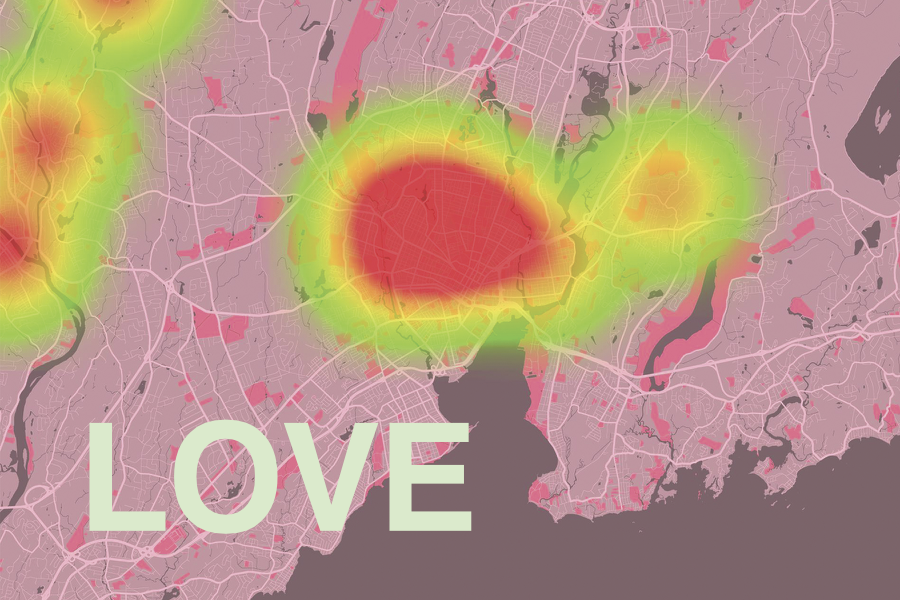
Can geo-referenced User Generated Content (UGC) shared over social online platforms be useful for the creation of meaningful, real time indicators of urban quality, as it is perceived and communicated by the citizens? Is it possible to use real-time text mining and conversational analysis methods on UGC in order to draw a series of maps depicting the very many and co-existing mental images of a city? How does an urban semantic layer – the meanings we attach to places – look like? How are well-being and happiness linked to places and how can we map them in real-time?

The paper presents a methodology and an experiment aiming to recognize multiple stories, as they emerge, influence each other, unfolding from city users’ mental representations and spatial experiences of city spaces, by conducting an analysis on location-based data sets extracted in real-time from UGC.

In particular how different ethnic groups are distributed spatially and temporally within the city of Milan and what are their sentiments towards the city spaces they name.”

Reading through the abstract, it is clear how the concept expressed in VersuS evolved along a specific direction: to try to understand and describe/visualize the mental models through which citizens of different cultures perceive and live their cities, harvesting their expressions on social networks to infer emotions, approaches, desires and visions.

This is obviously a very delicate domain, which engages multiple issues which are very difficult to approach even one-by-one:

  • the lack of extensive research in the field, leading to the necessity of performing massive tests and to engage multiple other researchers in validating the results which progressively are produced
  • the lack of real understanding of how the issues of digital divide allow to consider these kinds of results as being relevant now, and of the ways in which it is possible to forecast how they will be relevant in the (near) future
  • the lack of real understanding of the ways in which it is possible to truly promote digital inclusion on these topics (in this: the answers to this question which sound like “enable free network/wifi access in cities” are obviously incomplete, as they do nothing to address the cultural dimension of “inclusion” and the need to understand diversity in cities, the effects it produces and the opportunities which it opens up)
  • the lack of real understanding of the ways in which it is possible to conceive inference methodologies which allow to identify and classify emotions, wishes, visions, desires and expectations expressed by people, in multiple languages and contexts (that is: if we really want to go beyond the idea of “buzz” which is promoted by marketing professionals, which really lacks the complexity which is needed to approach the important issues of our cities)
  • the lack of a real, diffused discussion on the ethics of these processes (e.g.: “listening” to social networks, harvesting information, inferring knowledge, using it )
maps of babel

maps of babel

All these items (and more) transform this kind of research into a truly delicate domain, and researchers wishing to engage it are continuously forced to stop and deeply consider the implications of their actions, the validity of their methodologies, the relevance of their conclusions and the ethics of the practices they promote.

Luckily, many researchers are more than ready to engage the challenge in meaningful ways.

The issues raised by these processes never fail to bring up lively discussions in public occasions for debate.

This happened at Human Cities, as well.

Giorgia Lupi, who was representing us all in Bruxelles at the symposium, was faced with a very active audience: here you can read her report of the presentation and of the debate

From our point of view in this research (and, in general, in this type of research): artistic approach has proven to be truly insightful and really useful, as well.

As you might know if you follow the things that get published here on Art is Open Source, our main focus is the process of exposing and understanding the mutation that the ubiquitous availability and accessibility of digital technologies and networks has brought on to human beings and the ways in which the live, relate, work, learn.

Human beings have already transformed.  And so did cities, workplaces, schools, shopping centers, streets, cinemas, everything. Digital technologies and networks have already mutated the way in which we perceive the spaces and processes of our daily lives and the ways in which we define what can be called public and private space, identity, work, entertainment, relationship, memory, knowledge. Transformation has taken place in time/space/function, is taking place right now and it doesn’t show any trend in slowing down.

In this process, multiple ethical approaches clash, hence the debates, the critiques and also the dangers and perils which we face when companies, organizations and other subjects use the effects of these transformations in ways which are not properly positive. We can think of many aspects of this, from the whole international debate on the transformation of labor, to the planetary discussion on crisis, to censorship, to privacy, to the dark-side of crowdsourcing practices, etcectera.

In this whole scenario, possibly the most relevant thing to take into consideration is that transformation has already taken place. On one side, the multiple layers of digital information which wrap the spaces we use in our daily lives have great influence on the way we perceive the world and the way in which we act. On the other side, we constantly produce digital information, wether we’re turning the light on/off, paying with credit card, using our mobile phone or adopting one of the many ways in which, during these last few years, we have learned to express ourselves in new ways.

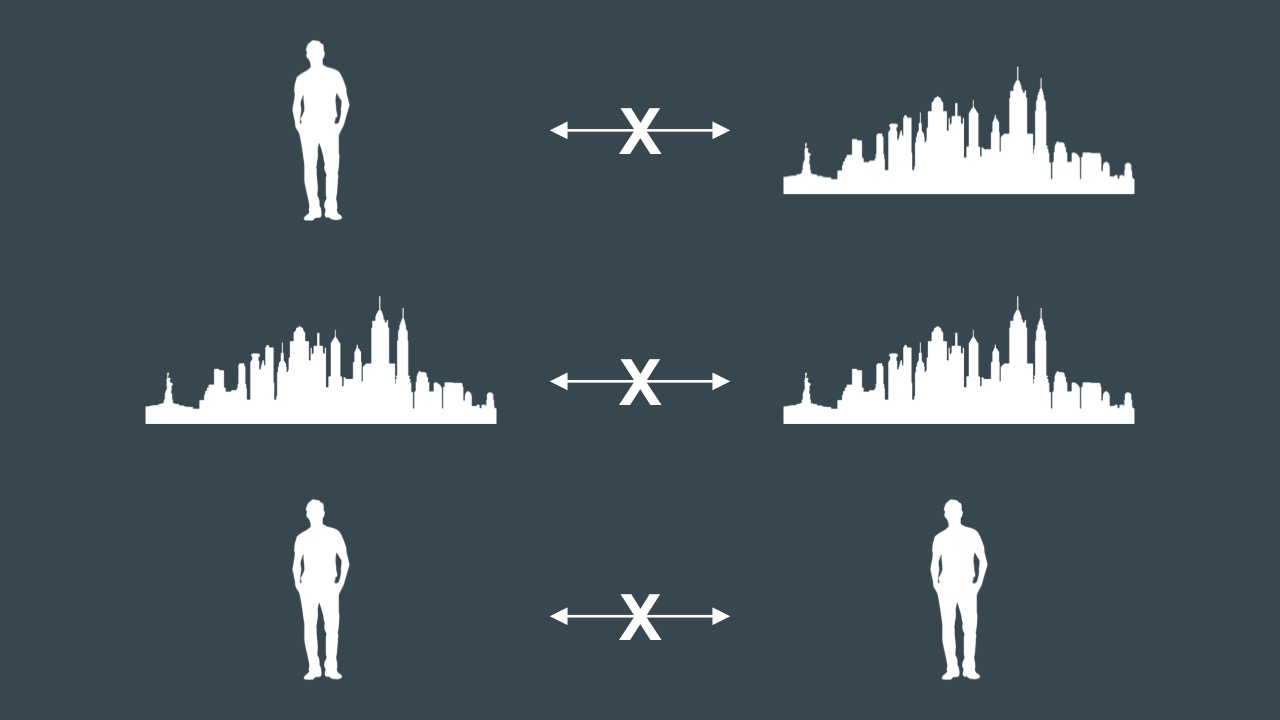
This process causes multiple, simultaneous, emergent uses of the same space co-exist at the same time in public/private spaces, ruled by the possibility that people have to access digital technologies and networks and to use them to perform the activities of their daily lives. According to this point of view a park bench can instantly transform itself into a temporary, full-blown, mobile office, triggered by a single phone call, just as well as a table at a bar can instantly become the place for a family reunion across continents, thanks to a simple videoconferencing application. In the same ways, humanity is already in the process of fully adopting the possibility to express judgements, ratings, ideas, visions and desires about places and situations using ubiquitous social applications, making their thoughts and presence available to everyone else, in a new definition of both privacy and public space.

Now: this information can, obviously, be used for the most different purposes, from the most positive ones to the most devious ones.

What we believe is that there is no single answer, and that the possibilities must be exposed and critically evaluated.

Through art and projects like VersuS and ConnectiCity (and, before that, with other projects such as Squatting Supermarkets, REFF and more ) we have been able in the past to coordinate multiple disciplines and methodologies in performing this exact task: exposing possibilities and critically evaluating them. Along the way we have been able to realize a series of things among which is the consideration that a series of models which directly originate from peer-2-peer methodologies are now available and applicable to the most varied domains, from what-was-once industrial production to the production of knowledge, to education, and so on. These models’ accessibility is directly related to the availability of tools and strategies according to which information is freely accessible, remixable, recombinable, mash-up-able, layer-able, re-programmable and directly interrelat-able to the objects/spaces/processes of our daily lives. These models directly promote a vision by which citizens become active and aware agents of society, producing and accessing information to gain understanding and insights about the environments they live in, the societies and communities which they are part of. In this scenario, the accessibility of real-time, accessible sources of information about the ideas, wishes and expectations of their fellow citizens, together with ways to interconnect to one another and to freely express , constitute the basis to rethink those processes to which we refer to as “politics”, “education”, “urban planning”, “city governance” and so on.

The possibility to redesign in such radical ways these fundamental building blocks of our societies, allow us to also re-imagine many of the things we use each day as the basis of our lifestyles, and the possibility to redefine these public information/interaction/participation spaces is directly connected to the possibility to enact the new, emerging, models for production of energy, products, services, knowledge, food, transport.

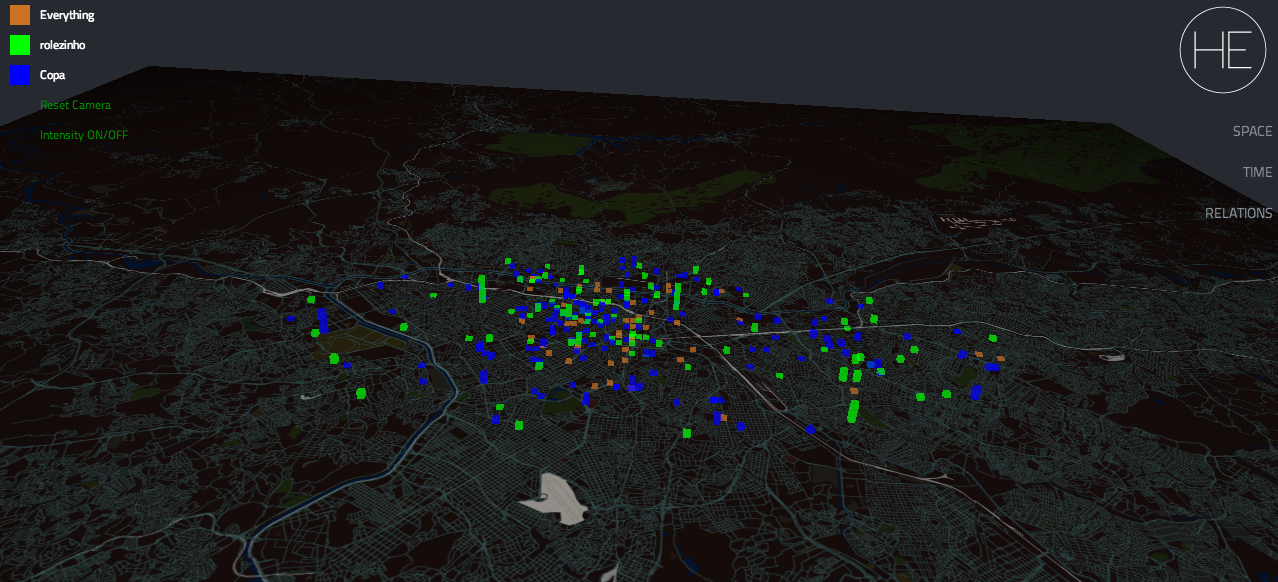
Obviously: this domain is still an area for pioneers. And, luckily, many researchers, artists, designers, architects, engineers, social scientists, anthropologists, hackers and more are constantly dedicating more and more efforts to try and establish the first few reliable answers to the enormous doubts which we all have when we, eventually, see those dots on the maps, colored according to the emotion they represent, as inferred from a specific social network message using algorithms  which originate from artificial intelligence and expert systems. What are they about? How can I use them? How can people use them?

The fact is: they are there, available and free; easily obtainable from social networks. For positive, negative and in-between purposes.

All perspectives should be taken into account.

In a recent artwork, we used the exact same technologies which are used for VersuS and Maps of Babel: real-time harvesting from social networks; georeferencing / geoparsing / geoprocessing; natural language analysis; emotional analysis.  We used them to power an interactive installation. As artists, we felt the need to go beyond form and interaction, and to also explicitly expose the implications deriving from this now simple act of listening to planetary communities through social network information harvesting. A fundamental part of the project was to expose the techniques and the results of these processes from a rich variety of points of view.

In the exhibit, people could purchase internet users for 9.99 euros, in a little box. In the box: information visualizations and a QRCode connected purchasers to a simple interface which showed the most recent emotions expressed by their “purchased” user on social networks. Practically: an unaware user became your personal emotional tamagotchi.

That is to say: we must take in critical consideration and evaluation as many scenarios as possible, paying great attention to the negative outcomes that might be produced, and we also need to be as transparent as possible in the process.

That is also to say: these processes we are experimenting are constantly granting us a series of incredibly rich insights on the ways people live in their cities. In the first experiment with VersuS produced for the Piemonte Share Festival at the Natural Science Museum in Turin we have shown the city of Turin as expressed through social media by people speaking different languages: the stories of markets, streets, neighborhoods, historical areas and commercial areas as experienced by all the different cultures came out in incredible detail, as the same corner of the street became a place for quick traversal, a place for worship, a location for business, a meeting place and a community node according to the people, times and modalities through which it was used in the various hours of the day, day of the week or period of the year. This kind of experience, we believe, can be positively transformed into a tool which is useful to engage people, through knowledge and information,  to take active, participative, informed role in the governance of their cities and communities.